
General educational information. This article does not provide a diagnosis or a personal treatment plan. No medical review is claimed. Our medical review policy.
I used to think fruit was off-limits when trying to lose weight. Seems like everything I enjoyed eating had too much sugar, right? But then I realized I was approaching this all wrong. Fruit isn’t your enemy it’s actually one of your best allies for weight loss when you choose wisely and eat it smart.
Here’s the thing about fruits: they’re real food packed with nutrients, fiber, and water. That combination actually makes weight loss easier, not harder. The trick is knowing which fruits work best and how to fit them into your eating routine without overdoing it.
Why Fruit Is Actually Good for Weight Loss
Let me break down why fruit helps you lose weight instead of adding pounds.
First, fruits are mostly water. A medium apple is about 86% water. Berries? Even higher. That means you’re eating volume something that fills your stomach and makes you feel satisfied without consuming a ton of calories. A cup of strawberries has only about 50 calories. You can eat a decent amount without going overboard.
Second, fruit has fiber. That’s the stuff that keeps you full longer and stabilizes your blood sugar so you don’t crash and crave junk food an hour later. When you feel steady and satisfied, you naturally eat less overall.
Third, fruit comes with natural sweetness. If you’re someone who struggles with sugar cravings, fruit can satisfy that without the processed junk. You’re getting actual nutrients vitamins, antioxidants, minerals along with the sweet taste. That’s a win.
The mistake most people make is eating fruit like it has zero calories. It doesn’t. A banana has about 100 calories. An avocado has 240. But these are still reasonable amounts in the context of weight loss. The key is not eating fruit mindlessly or using it as an excuse to consume large quantities throughout the day.
Low Calorie Fruits for Weight Loss
These fruits are your go-to options when you want maximum nutrition and fiber with minimal calories.
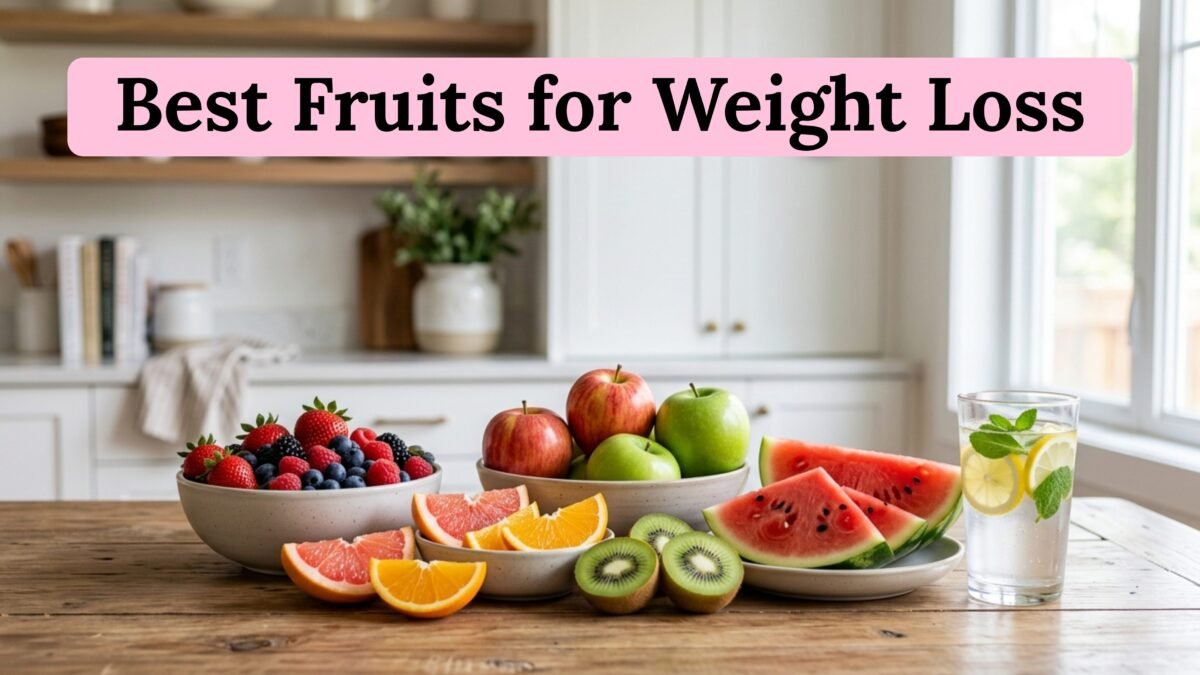
Berries are basically the gold standard. Strawberries, blueberries, raspberries, and blackberries all pack tons of flavor and nutrition into small portions. A cup of strawberries? About 50 calories. They’re high in fiber, which means you feel full longer. They’re also packed with antioxidants that support your metabolism.
Watermelon sounds like a summertime indulgence, but it’s genuinely helpful for weight loss. It’s 92% water and has about 45 calories per cup. The high water content means you can eat a satisfying amount without many calories. Plus, it’s naturally sweet, which helps with cravings.
Grapefruit has been getting attention in weight loss circles, and for good reason. It’s low in calories—about 50 calories per half and the fiber content helps you feel full. If you eat grapefruit regularly, you might notice you naturally eat less at other meals because you’re more satisfied.
Oranges and tangerines are portable, satisfying, and about 60-80 calories each. The fiber in whole fruit (not juice) keeps you from getting hungry quickly.
Peaches have around 60 calories each and contain decent fiber. They’re sweet enough to satisfy a sugar craving and feel like a treat without derailing your goals.
Melons in general honeydew, cantaloupe follow the same pattern as watermelon. High water content, low calories, filling.
Papaya is about 55 calories per cup and contains enzymes that support digestion. It’s a solid option if you have access to it.
The pattern here? Most low-calorie fruits are high in water content. That’s your real advantage. You get volume and satisfaction without excess calories.
Fruits to Eat in Moderation
These aren’t “bad” fruits. They’re just higher in calories, so portion control matters more.
Bananas come in around 100 calories each. They’re great for post-workout fuel because of their potassium content, but eating three bananas daily might work against your weight loss goals.
Avocados are technically fruits, though most people think of them as vegetables. One avocado is about 240 calories. But they’re worth eating in smaller portions because they contain healthy fats that keep you satisfied. Half an avocado on toast is fine. Eating a whole one as a snack every day? That’s a lot of calories.
Mangoes and papayas can be higher calorie. A medium mango is about 100 calories, and it’s easy to eat more than one when they’re in season.
Grapes sneaking up on you is a real thing. They’re small, sweet, and easy to eat in large quantities without noticing. A cup is about 100 calories, which is fine, but eating straight from the container might lead to eating three cups without realizing it.
Coconut in any form is calorie-dense. Coconut milk, coconut oil, fresh coconut all high calorie. Small amounts are fine, but this isn’t a weight loss snack.
High Fiber Fruits for Weight Loss
Fiber is your secret weapon because it keeps you full and prevents blood sugar spikes that lead to cravings.
Raspberries are fiber champions. One cup has about 8 grams of fiber and only 60 calories. That’s an incredible ratio. You’re getting super full on minimal calories.
Pears have about 6 grams of fiber each and around 100 calories. Eating a pear with some almonds makes a really satisfying snack that holds you over.
Apples contain soluble fiber that specifically helps with satiety. An apple with some nut butter is a meal in itself. About 100 calories for the apple, and the nut butter adds staying power without overdoing it.
Blackberries rival raspberries for fiber content. They’re tart, so you might eat less of them before feeling satisfied compared to sweeter fruits.
Bananas have decent fiber too, even though they’re slightly higher calorie. That fiber is part of why they work as a post-workout food.
The takeaway? When you pick high-fiber fruits, you get full faster and stay full longer. You’ll naturally eat less of other foods because you’re genuinely satisfied.
How to Include Fruits in Your Diet Practically
Understanding which fruits are good for weight loss is one thing. Actually eating them in a way that supports your goals is another.
Breakfast option: Start with berries. Add them to oatmeal, yogurt, or eat them with whole grain toast. You’re getting fiber first thing in the morning, which sets a good tone for the day.
Snack strategy: Keep pre-portioned berries or apple slices ready. The convenience matters. If a sliced apple is sitting in your fridge, you’ll grab it. If you need to peel and slice one when you’re hungry, you might grab chips instead.
Lunch incorporation: Add fruit to salads. Berries on spinach with nuts and a light dressing. Sliced apple with a protein and some greens. You’re adding nutrition and satisfaction to your meal.
Dessert replacement: When you want something sweet after dinner, have fruit instead of processed desserts. Berries with a small amount of whipped cream if you want. A baked apple with cinnamon. Something that feels like a treat but actually supports your goals.
Post-workout timing: Have a banana with some protein. The carbs help with recovery and replenish muscle glycogen. The timing means those calories are going toward recovery, not storage.
Smoothie caution: Smoothies are where people accidentally consume a ton of calories. A handful of berries? Great. A whole banana, a cup of juice, protein powder, nut butter, and yogurt blended together? That’s a 500+ calorie drink masquerading as health food. If you make smoothies, keep them simple and measure ingredients.
Simple Daily Eating Example
Here’s what a realistic day of eating fruits for weight loss might look like:
Breakfast: Greek yogurt with berries and granola. The fruit adds sweetness and fiber without many calories.
Mid-morning snack: An apple with a tablespoon of almond butter. Satisfying and holds you until lunch.
Lunch: Grilled chicken with brown rice, vegetables, and a small side of fresh pineapple or berries.
Afternoon snack: A handful of strawberries or a small orange.
Dinner: Salmon with roasted vegetables and a side of watermelon.
Notice you’re eating fruit multiple times daily, but in reasonable portions as part of balanced meals, not as the main event. You’re combining fruit with protein and whole grains, which keeps your blood sugar stable and you feeling full.
Common Mistakes People Make
Eating fruit without protein: A bowl of grapes alone will leave you hungry in an hour. Grapes with cheese? Much better.
Drinking fruit juice instead of eating whole fruit: Juice removes the fiber and delivers sugar straight to your bloodstream. A glass of orange juice has similar calories to a whole orange but leaves you less satisfied. Eat the whole fruit.
Thinking you can eat unlimited fruit: Fruit has calories. Eat too much, and you’ll gain weight. Moderation still matters.
Avoiding fruit because of sugar content: The natural sugars in fruit come packaged with fiber, water, and nutrients. That’s completely different from eating candy.
Waiting too long to eat fruit: Fruit makes a better snack when you’re mildly hungry, not starving. If you’re already ravenous, you might eat the fruit and then something else because fruit alone isn’t enough when you’re in desperation mode.
The Real Truth About Fruit and Weight Loss
Fruit isn’t magic. It won’t melt away fat on its own. But it’s one of the best tools you have for losing weight naturally because it’s nutritious, filling, and satisfying.
When I was figuring out what actually works for sustainable weight loss, I learned from different sources and experiences. Health Fitnesses covered the basics of how nutrients support metabolism and energy, and that helped me understand that fruit isn’t just about calories it’s about what those calories bring with them. A hundred calories of berries is different from a hundred calories of cookies because of the fiber, water, and nutrients involved.
The best approach isn’t to overthink this. Pick fruits you actually enjoy eating. Get them in your fridge ready to grab. Eat them as snacks between meals or as part of breakfast and lunch. Don’t eat them obsessively. Don’t restrict them because you’re scared of the natural sugar. Just incorporate them into normal eating patterns as part of your weight loss approach.
Combined with whole grains, lean protein, and vegetables, fruit becomes part of a sustainable weight loss plan. You’re not dieting. You’re just eating real food that supports your body’s needs and your weight loss goals.
Start simple. Add berries to breakfast tomorrow. Cut up an apple for a snack. That’s enough. Small changes compound into results.