
General educational information. This article does not provide a diagnosis or a personal treatment plan. No medical review is claimed. Our medical review policy.
How to Start Eating Right Without Feeling Overwhelmed
Most people don’t start thinking seriously about food until something forces them to. A doctor’s visit with a not-so-great report. A few extra kilos that won’t budge. Low energy that coffee can no longer fix. Or simply a quiet decision one morning that it’s time to do better.
If that sounds familiar, you’re not alone. And more importantly, you don’t need to overhaul your life overnight.
A balanced diet plan for beginners isn’t about restriction or perfection. It’s about learning how food actually works in your body and building habits that last. This guide will walk you through the essentials clearly and practically, with no fluff and no one-size-fits-all promises.
What Does “Balanced Diet” Actually Mean?
The term gets thrown around constantly, but it’s often misunderstood. A balanced and healthy diet is one that gives your body everything it needs: the right amount of energy, enough protein to support your muscles and cells, healthy fats for your brain and hormones, complex carbohydrates for sustained fuel, and micronutrients like vitamins and minerals to keep your systems running properly.
It’s not about eating “clean” every single meal. It’s about eating well across the week. Think of it like a budget. If you overspend a few days but stay within range overall, the balance holds. That’s how nutrition works for most healthy people.
Why Most Beginners Struggle
Here’s the honest truth: most people who try to overhaul their diet quit within three weeks. Not because they lack willpower, but because they go too far, too fast.
They cut out everything they enjoy. They start following a rigid plan that doesn’t fit their schedule or culture. They feel deprived, get hungry, and eventually give up.
The solution isn’t more discipline. It’s a smarter starting point. When you understand the structure behind healthy eating, you can make decisions on the fly, adapt to real life, and still make consistent progress toward your goals, whether that’s weight loss, more energy, or just feeling better in your body.
The Building Blocks of a Balanced Diet Chart
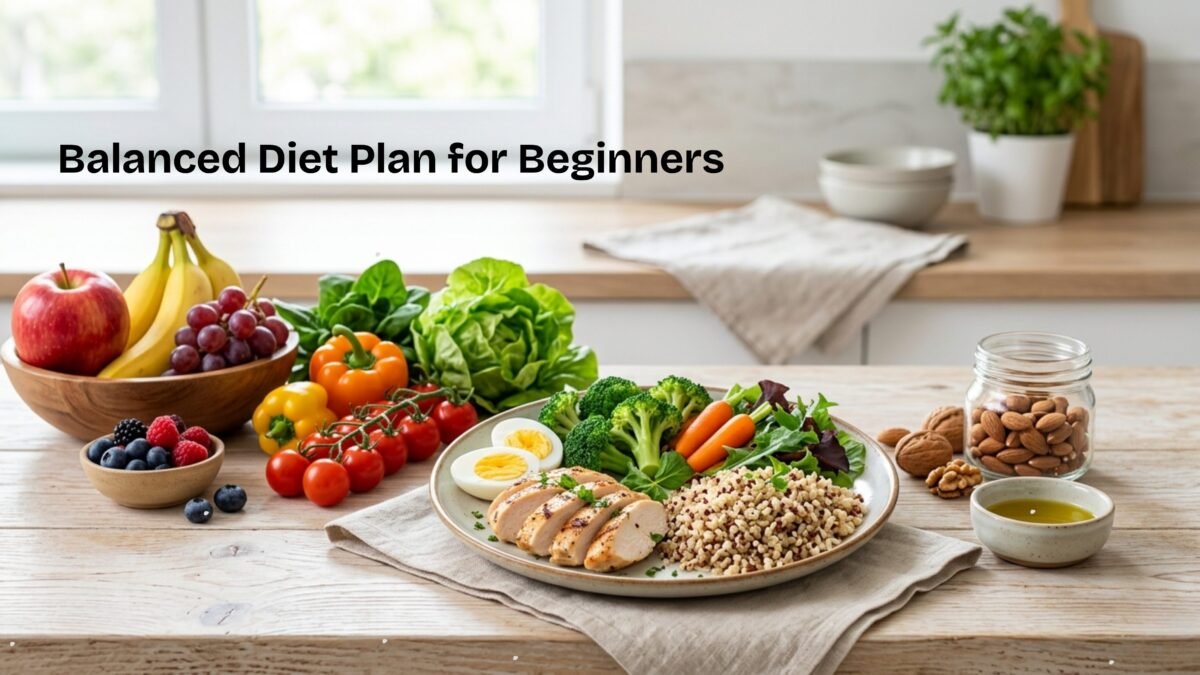
Understanding the basics makes everything easier. Your plate should generally include:
- Protein keeps you full, builds muscle, and supports recovery. Great sources include eggs, chicken, fish, legumes, tofu, and Greek yogurt. High protein foods for muscle building are especially important if you’re also exercising. Aim for a palm-sized serving at every main meal.
- Complex Carbohydrates give you steady energy without the crash. Think oats, brown rice, sweet potatoes, quinoa, and whole grain bread. These are very different from refined carbs and sugars, which spike and drop your blood sugar quickly.
- Healthy Fats are not the enemy. Avocados, olive oil, nuts, seeds, and fatty fish support brain function, reduce inflammation, and actually help with weight management when eaten in the right amounts.
- Vegetables and Fruits are the foundation of any healthy diet. Aim to fill half your plate with colorful produce. Different colors mean different antioxidants, vitamins, and minerals.
- Fiber and Water are the two most underestimated parts of a proper diet chart. Fiber from vegetables, legumes, and whole grains feeds your gut bacteria and regulates digestion. Staying well hydrated affects everything from energy to metabolism to hunger signals.
Comparing Popular Diet Plans: What Works for Beginners?
You’ve likely heard of dozens of diet approaches. Here’s a quick, honest look at some common ones:
- The Mediterranean Diet is consistently ranked among the most sustainable and health-positive eating styles in the world. A typical Mediterranean diet meal plan includes lots of vegetables, legumes, whole grains, fish, olive oil, and moderate dairy. It’s flexible, culturally rich, and enjoyable. For beginners, it’s one of the most realistic starting points.
- DASH Diet: The DASH Diet was built around managing blood pressure, but it works remarkably well as an everyday eating framework. It leans heavily on fruits, vegetables, whole grains, and low-fat dairy, while cutting back on sodium and heavily processed foods. It gives you enough structure to follow without feeling like a punishment.
- Low Carb and Keto: Low carb and keto both work by cutting carbohydrates, which shifts your body into burning fat for fuel instead. Full keto is quite strict and takes real effort to maintain, especially if you're new to tracking macros. A standard low carb approach is less rigid and tends to be a more comfortable entry point for most beginners.
- High Protein Diets: A high protein approach works well for weight loss because protein keeps you fuller for longer and helps preserve muscle mass while you're in a calorie deficit. It's also one of the more practical plans to follow day-to-day, since high protein meals tend to be simple, filling, and easy to put together.
- Whole30: Whole30 is a strict 30-day elimination protocol that cuts out sugar, alcohol, grains, legumes, dairy, and processed foods entirely. It's not designed to be a forever diet. Most people use it as a reset to break poor eating habits, spot food sensitivities, or simply understand how certain foods affect how they feel. It's challenging, but many people find it genuinely eye-opening.
- Intermittent Fasting (16:8) isn’t about what you eat but when. With 16:8 intermittent fasting, you eat within an 8-hour window and fast for 16 hours. It can simplify meal planning and help create a calorie deficit naturally. It works well for some people and not at all for others.
The takeaway: no single plan is universally best. The best diet is the one you can stick to consistently.

Sample 7-Day Meal Plan for Weight Loss
This is not a strict prescription. It’s a template to show you what balanced, practical eating looks like across a week.
Day 1
Breakfast: Scrambled eggs with spinach and whole grain toast | Lunch: Grilled chicken with brown rice and roasted vegetables | Dinner: Baked salmon with quinoa and steamed broccoli
Day 2
Breakfast: Greek yogurt with berries and a handful of oats | Lunch: Lentil soup with a side salad and olive oil dressing | Dinner: Stir-fried tofu with mixed vegetables and brown rice
Day 3
Breakfast: Oatmeal with banana and almond butter | Lunch: Tuna salad on whole grain bread with tomato slices | Dinner: Grilled chicken thighs with sweet potato and green beans
Day 4
Breakfast: Smoothie with spinach, frozen mango, protein powder, and almond milk | Lunch: Chickpea and vegetable curry with brown rice | Dinner: Beef stir-fry with broccoli, bell peppers, and quinoa
Day 5
Breakfast: Whole grain toast with avocado and a poached egg | Lunch: Mixed greens with grilled shrimp, cucumber, cherry tomatoes, and tahini dressing | Dinner: Baked cod with roasted cauliflower and whole grain pasta
Day 6
Breakfast: Eggs with sautéed mushrooms and whole grain toast | Lunch: Turkey and avocado wrap with lettuce | Dinner: Homemade bean and vegetable soup with crusty whole grain bread
Day 7
Breakfast: Pancakes made with oats, banana, and eggs | Lunch: Grilled vegetables with hummus and pita | Dinner: Roast chicken with roasted root vegetables and a simple salad
Calorie Deficit and Weight Loss: Keeping It Realistic
A calorie deficit diet plan simply means consuming slightly fewer calories than your body burns. For most people, a deficit of 300 to 500 calories per day leads to gradual, sustainable weight loss of roughly 0.5 to 1 kg per week.
You don’t need to obsess over numbers. But understanding the concept helps. If you’re eating well but not losing weight, portion sizes are usually the reason. A healthy eating plan for weight loss doesn’t require starvation. It requires awareness. Platforms like Health offer tools to track your nutritional intake and understand your eating patterns over time, which can be especially helpful when you’re starting out and trying to build a realistic picture of your habits.
Foods for a Healthy Gut: The Often-Ignored Foundation
Your gut does far more than digest food. It influences your immune system, mental health, energy levels, and hormones. Eating well means feeding your gut bacteria well too.
Foods for a healthy gut include fermented options like yogurt, kefir, kimchi, sauerkraut, and miso. High-fiber foods like oats, lentils, garlic, onions, bananas, and leafy greens also feed beneficial bacteria and keep your digestive system moving properly. A healthy gut diet doesn’t require exotic or expensive ingredients. Most gut-supportive foods are simple and affordable.
Common Mistakes Beginners Should Avoid
- Skipping meals. This usually leads to overeating later. Three balanced meals or two meals with a healthy snack tends to work better than prolonged fasting for most beginners.
- Eliminating entire food groups. Unless you have a medical reason, cutting out all carbs or all fat creates unnecessary restriction and often backfires.
- Over-relying on packaged “healthy” foods. Labels like “low fat” or “sugar-free” are marketing terms. Many of these products are heavily processed and nutritionally poor.
- Neglecting protein. Protein keeps you full and prevents muscle loss during weight loss. Make sure every meal has a good source.
- Expecting too much too soon. Sustainable change takes time. A normal diet plan for weight loss that you maintain for six months will always outperform an extreme program you quit in three weeks.
Practical Meal Planning Tips
Meal planning doesn’t have to mean spending your entire Sunday in the kitchen. Start small:
- Pick two or three go-to breakfasts and rotate them.
- Keep lunch simple with proteins and vegetables.
- Plan dinners loosely for the week and shop accordingly.
- Keep healthy snacks on hand so hunger doesn’t drive poor choices.
Over time, meal planning becomes second nature. It reduces decision fatigue, saves money, and means you’re far less likely to reach for something convenient but nutritionless.
A Thoughtful Note to Close
Food is personal. It’s tied to culture, memory, family, and comfort. A good diet doesn’t strip that away. It builds on it.
You don’t need to eat perfectly. You need to eat well most of the time, understand what you’re putting in your body, and make small, consistent improvements. That what a real healthy eating plan for weight loss looks like. Not dramatic, not restrictive, but steady and sustainable.
Start with one change this week. Eat one more vegetable. Replace one processed snack with something whole. Drink more water. Build from there. Progress, not perfection, is the foundation of lasting health.