
Introduction
The stadium erupts as a midfielder sprints down the wing in the 87th minute of a World Cup knockout match. His legs haven’t failed him despite two hours of intense pressure. Analysts will praise his stamina and tactical awareness, but what actually fuels that performance happens long before kickoff in training camps, hotel kitchens, and carefully planned meals.
What do FIFA World Cup players eat? It’s a question that fascinates fans, amateur athletes, and anyone curious about how elite performers maintain their edge at the sport’s biggest stage. The answer isn’t glamorous. There are no exotic superfoods or secret formulas. Instead, professional footballers follow science-backed nutrition strategies focused on sustained energy, muscle recovery, and mental sharpness. These aren’t generic diet plans. Each player’s nutrition is customized based on their position, body composition, training load, and individual response to different foods.
The difference between a player who finishes strong in the 90th minute and one who fades away often comes down to intelligent fueling. Understanding what elite footballers eat reveals principles that recreational players and fitness enthusiasts can adapt for their own performance.
The Importance of Nutrition in World Cup Football
Football at the World Cup level demands something different from nutrition than a casual weekend match. A player covers 10 to 12 kilometers during a typical match, executing explosive movements, rapid directional changes, and sustained sprinting. All of this happens while maintaining tactical awareness and decision-making under fatigue.
The physical demands are relentless. Heart rates reach maximum levels repeatedly throughout 90 minutes. Glycogen stores deplete. Muscle fibers experience microscopic damage. Mental fatigue sets in as the match progresses. Poor nutrition doesn’t just affect a player’s running power in the final 20 minutes it impacts reaction time, decision quality, and injury recovery in the days following competition.
World Cup tournaments compress multiple matches into short timeframes. A player might face three group matches in 10 days, then knockout rounds with only 48 to 72 hours between games. Recovery becomes critical. What a player eats in those recovery windows directly determines readiness for the next match. This is why elite teams employ sports nutritionists who customize meals for each individual.
What Do FIFA World Cup Players Eat on a Typical Day?
A World Cup player’s day starts early with breakfast. This meal sets the tone for training or match performance. Most footballers consume 400 to 600 calories at breakfast, balancing carbohydrates, protein, and healthy fats.
Typical breakfast choices include oatmeal with banana and honey, whole grain toast with eggs and avocado, or porridge with berries and almonds. Some players prefer pancakes made from whole wheat flour topped with lean protein and fruit. The goal is a meal that provides sustained energy without causing digestive discomfort during training.
Mid-morning, many players have a small snack. This might be a banana with a small handful of almonds, a Greek yogurt, or a piece of fruit with a small amount of nut butter. This snack bridges the gap between breakfast and lunch while maintaining steady blood sugar.
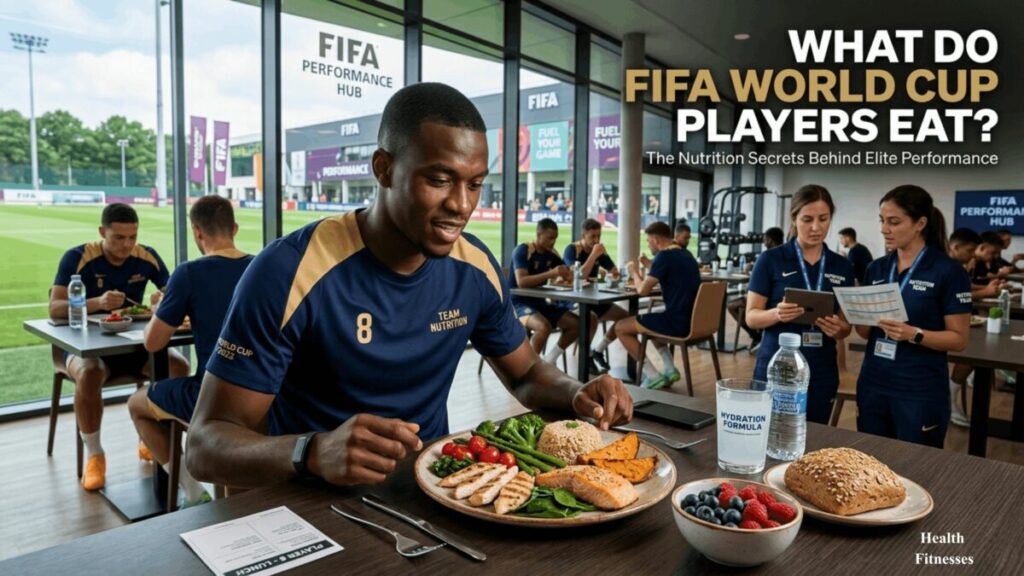
Lunch is substantial. Players typically consume 600 to 800 calories focused on lean protein and complex carbohydrates. Grilled chicken breast with rice and steamed vegetables is standard. Some prefer salmon or white fish with sweet potato and broccoli. Others choose pasta with turkey meatballs and tomato sauce. The portions are generous because the afternoon training session demands fuel.
A pre-training snack comes about 30 to 60 minutes before practice. This might be a sports drink with carbohydrates and electrolytes, a banana with honey, or a small rice cake with jam. The goal is easily digestible carbohydrates that provide quick energy without sitting heavy in the stomach.
Dinner is another substantial meal. Players often consume 600 to 800 calories with emphasis on lean protein for muscle recovery and repair. Grilled steak with roasted potatoes and mixed vegetables, baked chicken with quinoa and roasted vegetables, or fish with sweet potato are common choices. Some teams incorporate local cuisines adapted to their nutritional standards.
Evening might include a small recovery drink or snack containing carbohydrates and protein within 30 to 60 minutes after training. This recovery window is critical for replenishing glycogen and supporting muscle adaptation.
Pre-Match Nutrition Strategy
What a player eats in the 24 hours before a match matters enormously. Most footballers eat normally the day before, maintaining their standard diet but perhaps increasing carbohydrate portions slightly to top off glycogen reserves. However, some players consume a “carb-loading” meal the evening before to maximize glycogen storage.
The meal 3 to 4 hours before kickoff is strategic. Players consume familiar foods they know sit well in their stomach. This meal is 500 to 800 calories with emphasis on carbohydrates and moderate protein, while fats and fiber are minimized to avoid digestive discomfort. Pasta, rice, chicken, and toast are typical choices.
About 1 to 2 hours before the match, many players consume a light snack or beverage. This might be a banana, a sports drink, or a small amount of honey. The purpose is topping off blood glucose without creating a heavy feeling.
Some players prefer eating 2 to 3 hours before the match rather than immediately before, allowing time for digestion. Others have learned through experience that they perform best with minimal food in their system during the final hours. Nutritionists work with each player to identify what works for their body.
Hydration begins well before kickoff. Players gradually drink water and electrolyte beverages throughout the day to ensure they enter the match fully hydrated.
Match-Day Meals and Energy Sources
On match day, players consume carbohydrate-rich meals throughout the day to maximize liver and muscle glycogen. The strategy differs for players who have matches in the morning versus evening.
For evening matches, the day typically follows this pattern:
1. Breakfast: Oatmeal, fruit, and toast
2. Mid-morning snack: Banana and nut butter
3. Lunch (3 to 4 hours pre-match): Rice, chicken, and vegetables
4. Pre-match snack (1 to 2 hours before): Banana or energy drink
5. Post-match recovery: Protein and carbohydrates within 30 minutes
For morning or early afternoon matches, players consume an earlier breakfast and adjust meal timing accordingly.
The drinks consumed during the match matter too. Sports drinks containing 6 to 8 percent carbohydrates and electrolytes are consumed during halftime and sometimes during water breaks. These drinks provide quick energy and maintain hydration without the heaviness of solid food.
Recovery Meals After a Match
The window immediately following a match is when nutrition becomes most critical. Within 30 to 60 minutes, players consume a meal or drink containing both carbohydrates and protein. This combination triggers muscle glycogen repletion and supports muscle protein synthesis the process of repairing and building muscle tissue.
Recovery meals typically contain 1 to 1.2 grams of carbohydrates per kilogram of body weight paired with 20 to 40 grams of protein. For a 75-kilogram player, this means 75 to 90 grams of carbohydrates and 20 to 40 grams of protein.
Practical examples include chocolate milk, a smoothie made with fruit and whey protein, pasta with lean meat and tomato sauce, or rice with fish. These meals need to be appealing enough to eat when exhausted and potentially nauseous from exertion.
Within 2 to 3 hours after the match, players have another substantial meal emphasizing protein and carbohydrates. This meal supports continued recovery and replenishes nutrients depleted during competition.
Hydration and Electrolyte Management
Hydration isn’t casual in professional football. Players lose 1 to 2 liters of sweat during a 90-minute match, along with electrolytes including sodium, potassium, and magnesium. Proper hydration maintains cardiovascular function, temperature regulation, and cognitive performance.
Pre-match hydration begins the day before. Players drink consistent amounts of water and electrolyte beverages, ensuring urine color remains pale yellow a visual indicator of adequate hydration.
During the match, players consume 150 to 250 milliliters of sports drink every 15 to 20 minutes during stoppages and breaks. This provides both fluid and carbohydrate replacement, maintaining blood glucose levels.
Post-match, players drink approximately 150 percent of fluid lost during the match over the next 4 to 6 hours. If a player lost 2 kilograms during the match (roughly 2 liters of sweat), they would consume 3 liters of fluid with electrolytes over the next several hours. Drinking the entire amount at once causes fluid to pass through the system without proper absorption, so spreading consumption across hours is essential.
Foods Professional Footballers Usually Avoid
Elite footballers aren’t completely restrictive, but they understand consequences. Certain foods compromise performance or slow recovery.
High-fiber foods are limited before matches because they can cause digestive distress. While fiber is healthy for overall nutrition, timing matters. High-fat fried foods sit heavily in the stomach and slow digestion. Sugary desserts and soft drinks cause rapid blood glucose spikes followed by crashes that leave players fatigued.
Excessive red meat is sometimes avoided pre-match because it takes longer to digest than lean protein. Alcohol is completely restricted during tournament play due to impacts on hydration, recovery, and cognitive function.
Some players have identified individual sensitivities. A player might perform poorly if they’ve consumed dairy, while another has no issue. These individual responses are learned through experience and testing.
Nutrition Secrets of FIFA World Cup Players
Professional footballers employ several nutrition strategies beyond basic meal planning.
Periodization means nutrition changes based on the training phase. During intense training blocks, carbohydrate intake increases. During recovery phases, portions adjust. Micronutrient timing becomes strategic, with specific vitamins and minerals consumed at optimal times for absorption and effect.
Nutrient timing extends beyond just “when” to eat. Pre-training, during training, and post-training nutrition are all specifically planned. Some teams monitor real-time performance data and adjust nutrition based on individual response.
Gut health receives surprising emphasis. A player with poor digestion can’t properly absorb nutrients from food. Some teams use specific probiotic foods or supplements, while others employ sports nutritionists who focus on digestive optimization.
Supplementation is personalized. While popular supplements like creatine, beta-alanine, and beetroot juice have research supporting their benefits, elite teams don’t take a one-size-fits-all approach. Each player’s supplement protocol is individualized based on their specific needs and response.
Psychological aspects matter too. Players eat foods they genuinely enjoy, not just optimized options. A player who loves a particular food might include it in their nutrition plan because the psychological benefit of eating something satisfying outweighs marginal performance gains from substituting something “better.”
Best Foods for Football Players
Food | Nutritional Benefit | Best Timing
White Rice | Fast-digesting carbohydrates, easily tolerated | Pre and post-match
Chicken Breast | Lean protein, low fat, complete amino acids | Any meal, especially lunch/dinner
Salmon | Protein, omega-3 fatty acids, anti-inflammatory | Lunch or dinner for recovery
Sweet Potato | Complex carbohydrates, potassium, fiber | Lunch or dinner
Banana | Quickly available carbohydrates, potassium | Pre-training snack or match
Eggs | Complete protein, choline, vitamins | Breakfast
Oats | Complex carbohydrates, sustained energy, fiber | Breakfast
Pasta | Carbohydrate-dense, palatable, versatile | Pre-match or post-training
Greek Yogurt | Protein, probiotics, calcium | Breakfast or snack
Honey | Quick carbohydrates, easily digestible | Pre-training snack
These aren’t exotic foods. They’re basic, affordable, and effective.
How Football Nutrition Supports Performance and Recovery
The connection between nutrition and on-field performance operates through multiple pathways. Adequate carbohydrate intake maintains blood glucose, powering the muscles during explosive movements and supporting mental function. Without sufficient carbohydrates, a player’s decision-making slows and execution becomes less precise in the crucial final minutes.
Protein supports muscle repair and adaptation. The microscopic muscle damage that occurs during football training stimulates muscle growth only if adequate protein is available. Players consuming insufficient protein can’t properly adapt to training stress.
Electrolytes maintain the nervous system’s ability to fire muscle contraction signals. Depleted sodium and potassium compromise muscle function and increase injury risk.
Recovery nutrition accelerates the adaptation process. The 48 to 72 hours between matches is when muscles actually become stronger and more resilient. Proper nutrition during this window doesn’t just feel good it literally changes the player’s physical capabilities for the next match.
Common Diet Mistakes Amateur Players Make
Many recreational footballers unknowingly sabotage their performance through nutrition choices.
Eating too close to kickoff causes digestive discomfort and restricts blood flow to muscles. Many amateur players eat a large meal 30 minutes before a match, then wonder why they feel heavy and sluggish.
Inadequate pre-training fueling leaves the body without necessary carbohydrate energy. Training on an empty stomach might save calories, but it compromises training quality and recovery.
Neglecting post-exercise nutrition means missing the critical window when muscles are primed to absorb carbohydrates and protein for recovery. Waiting several hours after training to eat means less efficient recovery.
Dehydration creeps up on amateur players. They don’t monitor hydration systematically. By the time they feel thirsty during a match, dehydration has already begun affecting performance.
Excessive “clean eating” sometimes means insufficient calories overall. A player might eat only salads and lean protein, missing the carbohydrate quantities necessary for football training and competition.
Tips for Choosing the Right Sports Nutrition Plan
Finding the right nutrition approach requires experimentation and patience.
Start by identifying your individual baseline. Track your current eating patterns and how different foods affect your performance and recovery. Notice which foods sit well before exercise and which cause discomfort.
Experiment during training, not during matches. Test new meals, timings, and hydration strategies during practice sessions. Learn what your body tolerates and performs best with before relying on it before competition.
Consider your position and role. A goalkeeper has different demands than an outfield player. A defender covering less distance has different caloric needs than a wide midfielder constantly running up and down the pitch. Customize your nutrition to your actual demands.
Look at real examples from professional football. Someone already doing what you aspire to provides valuable guidance. Resources like Health Fitnesses provide evidence-based nutrition information specific to football athletes, helping you understand scientific principles rather than just following generic diet advice.
Seek professional guidance if possible. A sports nutritionist can assess your individual needs, preferences, and performance data to create a personalized plan rather than following a generic template.
Be consistent. The power of good nutrition comes from consistency over weeks and months, not perfection on individual days. Build sustainable habits that fit your lifestyle.
What Recreational Football Players Can Learn from World Cup Athletes
The nutrition principles that sustain World Cup players apply to anyone serious about football performance. You don’t need the resources of a national team to apply these principles.
Prioritize carbohydrate intake matching your training volume. If you’re training hard, you need adequate carbohydrates to fuel that training and recover properly.
Time your meals strategically. Eating 3 to 4 hours before playing is dramatically different than eating 30 minutes before. Time meals appropriately for your competition start time.
Consume recovery nutrition within reasonable timeframes after playing or training. This doesn’t require expensive supplements. A simple meal or drink with carbohydrates and protein consumed within a couple hours works effectively.
Hydrate consistently, not just during matches. Monitor your hydration throughout the day, especially on training days.
Be individual. What works for another player might not work for you. Experiment to understand your unique response to different foods and timing.
Remember that nutrition is one component of football performance alongside training, tactical understanding, and mental preparation. Good nutrition doesn’t overcome poor training or weak tactics, but poor nutrition guarantees underperformance regardless of other factors.
Conclusion
What do FIFA World Cup players eat? The answer is less mysterious than many assume. They eat familiar, accessible foods at strategic times designed to maintain energy, support recovery, and optimize performance. Their approach combines scientific understanding about how bodies process nutrients with practical experience about what works for their individual bodies.
The principles behind what do FIFA World Cup players eat translate directly to recreational and amateur football. Prioritize carbohydrates matching your training demands, time meals strategically, emphasize protein for recovery, maintain hydration, and experiment to understand your individual preferences and tolerances.
Elite footballers don’t perform at the World Cup because they have access to secret foods. They perform because they’ve built nutrition habits that support consistent training, enable rapid recovery, and maintain both physical and mental sharpness during competition. These same habits are available to any footballer serious about performance, regardless of their level.