
General educational information. This article does not provide a diagnosis or a personal treatment plan. No medical review is claimed. Our medical review policy.
What Every Active Person Should Know
Picture this: you walk up three flights of stairs and reach the top feeling completely fine. No gasping, no burning legs, no gripping the railing. Now compare that to six months ago, when the same climb left you winded halfway up. That difference? It came from lifting weights twice a week.
Most people discover the benefits of strength training for overall fitness almost by accident. They start with a simple goal, maybe losing a few pounds or building a bit of muscle, and somewhere along the way they realize their posture improved, their sleep deepened, and they stopped getting tired doing things they used to dread.
Strength training is not just for athletes or gym enthusiasts. It is one of the most effective, research-backed tools available for improving how your body functions day to day. This article breaks down exactly what it does, why it matters, and how to make it work for you in a realistic, sustainable way.
What Strength Training Actually Means
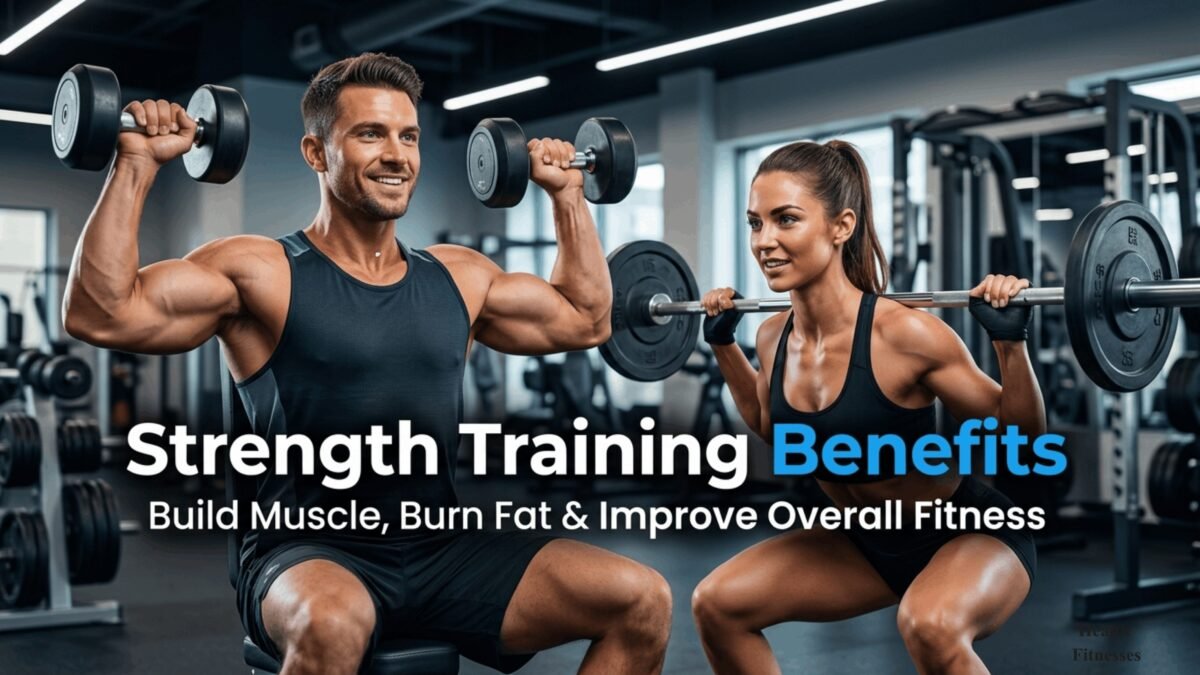
The term gets thrown around a lot, but it is worth being clear. Strength training, often called resistance training, is any form of physical exercise that requires your muscles to work against an external resistance. That resistance can come from dumbbells, barbells, resistance bands, cable machines, or even your own body weight.
The goal is to create controlled stress on the muscles so they adapt, grow stronger, and become more resilient over time. Progressive overload, gradually increasing the challenge over weeks and months, is what drives those adaptations forward.
What it is not is cardio. And that is not a criticism of cardio, which has its own undeniable value. Strength training targets the muscular and skeletal systems in a fundamentally different way, producing benefits that running or cycling simply cannot replicate.
Why Strength Training Matters for Long-Term Health
Muscle is metabolically active tissue. The more of it you carry, the more calories your body burns at rest. Bone density increases when muscles pull on bones during resistance exercise, reducing fracture risk as you age. Joint stability improves because stronger surrounding muscles absorb impact more effectively.
After age 30, the average person loses between three and five percent of muscle mass per decade if they do nothing to prevent it. That process accelerates after 60. Strength training slows or reverses this decline. It is, quite literally, anti-aging exercise.
People who maintain a consistent strength workout routine into their 50s and 60s typically show better balance, faster reaction times, and greater independence compared to those who skip resistance work entirely. The research on this is not subtle.
Physical Benefits of Strength Training for Overall Fitness
Muscle Growth and Functional Strength
Muscle strength training stimulates hypertrophy, the increase in muscle fiber size, as well as neuromuscular efficiency, meaning your brain gets better at recruiting the right muscles at the right time. You become not just bigger but more coordinated and capable.
Carry groceries up four flights of stairs? Easier. Move furniture without throwing out your back? More manageable. Chase after kids at the park without running out of steam? Actually doable. Functional strength transforms everyday tasks.
Body Composition and Weight Management
Strength training for weight management works differently from what most people expect. Yes, a heavy workout burns calories. But the more significant effect is what happens afterward. Elevated post-exercise oxygen consumption, sometimes called the afterburn effect, keeps your metabolism running higher for hours after you finish lifting.
Muscle tissue also increases your resting metabolic rate over the long term. A person with ten extra pounds of muscle burns significantly more calories at rest compared to someone of the same weight with more body fat. This is why fitness and strength training, combined, produce more lasting body composition changes than cardio alone.
Bone Density and Joint Health
Osteoporosis is largely preventable, and resistance training is one of the most powerful preventive tools available. Weight-bearing exercise signals the body to reinforce bone tissue, particularly in the spine, hips, and wrists, the three sites most vulnerable to fracture.
Joints benefit as well. Strengthening the muscles around the knee, hip, and shoulder reduces wear on the cartilage itself, which is why strength work is commonly prescribed as part of rehabilitation programs for arthritis and chronic joint pain.
Mental Health Benefits You Did Not Expect
Resistance training benefits extend well beyond the physical. The connection between lifting weights and mental wellbeing is backed by a growing body of clinical research.
Anxiety symptoms decrease with regular strength training. Depression scores improve. Cognitive function, including memory and executive function, shows measurable gains in older adults who take up resistance exercise. The mechanism involves increased blood flow to the brain, along with hormonal shifts that affect mood and stress regulation.
There is also something less quantifiable but just as real. When you set a goal, like finally pressing a barbell overhead, work at it for weeks, and succeed, you build a genuine sense of competence. That confidence has a way of bleeding into other areas of life.
Choosing the Right Strength Training Method
Not all resistance training tools are created equal, and the best choice depends on your goals, schedule, and access to equipment. The table below compares the most common approaches:
| Training Type | Primary Goal | Equipment | Best For |
|---|---|---|---|
| Free Weights | Muscle strength & size | Dumbbells, barbells | All fitness levels |
| Resistance Bands | Toning & mobility | Bands only | Home training, travel |
| Machines | Isolated muscle work | Gym equipment | Beginners learning form |
| Bodyweight | Functional strength | None required | Anywhere, any time |
No single method is objectively superior. Many experienced lifters use a combination, cycling through free weights for compound movements and resistance bands for accessory work or travel days.
Best Strength Training Exercises for Overall Fitness
If you had to pick a handful of movements that deliver the most return on your time investment, these are the ones that consistently appear on every experienced trainer's list:
- Squat (barbell, goblet, or bodyweight) - trains the entire lower body and core simultaneously.
- Deadlift (conventional or Romanian) - builds posterior chain strength from hamstrings to upper back.
- Bench Press or Push-Up - develops chest, shoulders, and triceps with scalable resistance.
- Bent-Over Row or Seated Cable Row - counterbalances pressing movements and builds a strong back.
- Overhead Press - strengthens shoulders and improves stability through the entire upper body.
- Hip Hinge variations - teaches proper lower back mechanics and reduces injury risk.
- Plank and core stabilization work - supports every other movement pattern on this list.
These are not the only exercises worth doing, but mastering them provides a foundation that transfers to virtually every other physical activity.
Common Beginner Mistakes in Strength Training
Getting started is exciting, but a few patterns tend to derail people early. Here are the ones that come up most often:
- Skipping warm-up: five to ten minutes of light movement primes your joints and nervous system for heavier work.
- Going too heavy too soon: ego-lifting leads to poor form and injuries that set you back weeks or months.
- Ignoring recovery: muscles grow during rest, not during the workout itself. Overtraining is a real problem.
- Avoiding compound movements: isolation exercises have their place, but skipping squats and deadlifts limits your overall progress.
- Inconsistency: one week on and two weeks off does not produce adaptation. Frequency matters more than intensity for beginners.
- Neglecting nutrition: strength training benefits are blunted significantly without adequate protein intake and total calories.
Building a Healthy Fitness Routine Around Strength Training
Two to three strength sessions per week is enough to produce meaningful results for most people. More is not always better, especially when you are starting out. What matters is that the sessions are consistent and progressive.
A practical weekly structure might look like this: two full-body sessions on non-consecutive days, with one day of moderate cardio or active recovery in between. As fitness improves, splitting into upper and lower body days allows for greater volume without excessive fatigue.
One reader who follows Health Fitnesses described her approach this way: she started with two thirty-minute sessions per week using only dumbbells at home. Within three months she had added a third session, graduated to a barbell, and noticed that her back pain, which she had managed for years, had largely disappeared. She did not change her diet significantly. She just picked things up and put them down, consistently.
That story is not unusual. It is actually pretty typical of what happens when people commit to a healthy fitness routine built around resistance training.
Tips for Choosing the Right Strength Training Approach
Match the Method to Your Life
The best program is the one you will actually do. A gym membership you never use beats home dumbbells you pick up every week only in theory. Honest assessment of your schedule, preferences, and available equipment will shape what works for you.
Start With Form, Not Load
Every experienced lifter will tell you the same thing: technique is the foundation. Learning to squat or hinge correctly with a light load takes weeks. Building those patterns incorrectly and then trying to undo them takes much longer. Invest time in form early.
Track Your Progress
A simple notebook or phone app tracking the weights and reps from each session gives you a feedback loop. Progress in strength training is rarely linear, but the trend over months should be upward. Seeing that trend is motivating in a way that vague feelings of improvement are not.
Know When to Rest
Soreness is normal, especially early on. Pain in joints or sharp sensations during movement are not. Learning the difference between productive discomfort and warning signals protects you from injuries that could sideline your progress for months.
The Long-Term Case for Making Strength Training a Priority
The benefits of strength training for overall fitness accumulate quietly. After a few weeks, you notice your posture shifting. After a few months, clothes fit differently. After a year, you realize you are doing things physically that felt impossible before, and some chronic discomfort you had accepted as normal has faded.
Strength training builds the body you can rely on. It protects your bones, preserves your muscle, supports your mental health, and improves the quality of everyday movement in ways that compound over decades. The earlier you start, the more those benefits stack up.
You do not need perfect equipment, a lot of time, or an elite training plan. You need a consistent habit, a willingness to learn proper technique, and enough patience to let the process work. The people who stick with it are the ones who stop chasing dramatic short-term results and start treating resistance training as a permanent part of how they live.
Pick up something heavy. Put it down. Repeat. Your future self will be grateful.