
General educational information. This article does not provide a diagnosis or a personal treatment plan. No medical review is claimed. Our medical review policy.
What Happens When You Actually Eat It Every Day
There's a good chance you've stood in a grocery store, picked up an avocado, squeezed it gently, put it back, and repeated that three more times before finally tossing one in your cart. Avocados have that effect on people they've become a bit of an obsession, and honestly, not without reason.
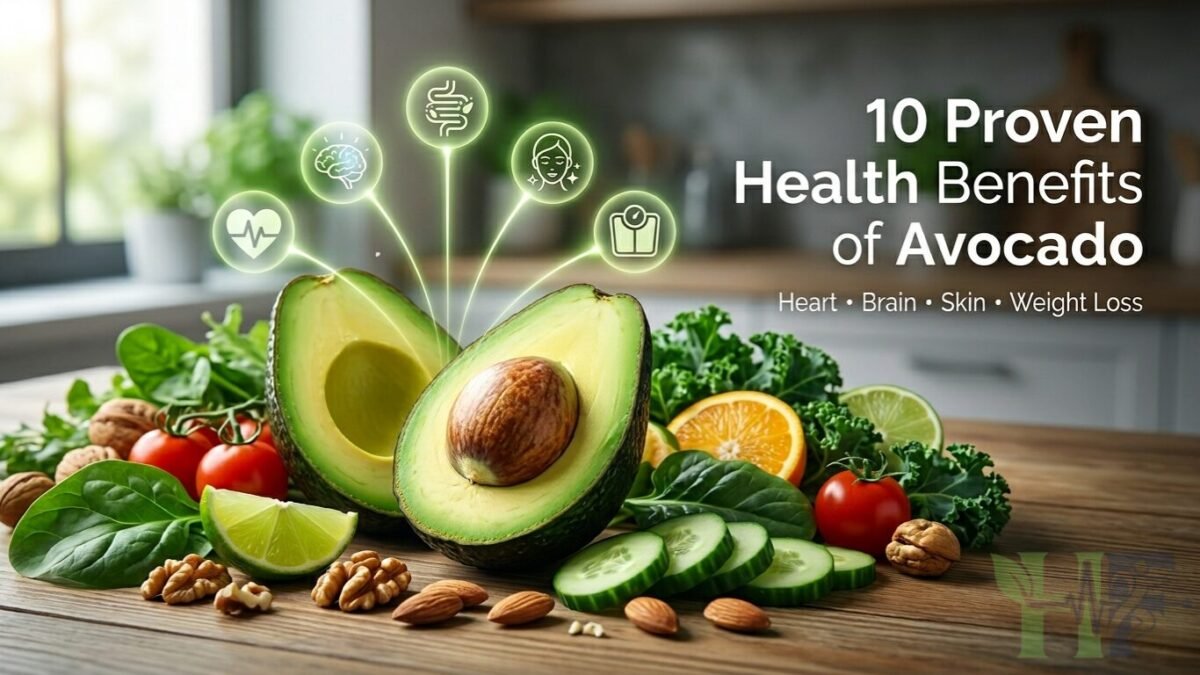
People started reaching for avocados as a toast topper years ago, but the shift from food trend to nutritional staple happened because the science kept delivering. The health benefits of avocado go far beyond "healthy fat." This fruit yes, it's technically a fruit quietly supports your heart, your gut, your skin, your hormones, and even your focus throughout the day. If you've been eating them occasionally without fully knowing why they're worth the hype, this article will change that.
What Makes Avocado Unique?
Most fruits are high in sugar and water. Avocado breaks that pattern entirely. It's one of the very few fruits that's loaded with fat the kind your body actually uses rather than stores. The flesh is dense, buttery, and satisfying in a way that signals your brain to ease up on hunger pretty quickly.
But the fat composition is where it gets interesting. Avocados are packed with monounsaturated fats, particularly oleic acid the same fatty acid that makes olive oil celebrated in Mediterranean diets. These fats are not passive ingredients. They actively support cell membrane integrity, help absorb fat-soluble vitamins from other foods you eat alongside avocado, and contribute to steady energy levels without blood sugar swings.
On top of the fat profile, avocados contain more potassium than bananas a claim most people have heard but few believe until they look it up. They're rich in B vitamins, vitamin K, vitamin C, vitamin E, and folate. The dietary fiber content rivals many legumes. There's almost no other single food that checks this many nutritional boxes at once.
Avocado Nutrition Facts
A standard serving is roughly half a medium avocado (approximately 100 grams). Here's what that looks like nutritionally:
| Nutrient | Amount Per 100g | % Daily Value |
|---|---|---|
| Calories | 160 kcal | 8% |
| Total Fat | 14.7 g | 19% |
| Monounsaturated Fat | 9.8 g | — |
| Saturated Fat | 2.1 g | 11% |
| Carbohydrates | 8.5 g | 3% |
| Dietary Fiber | 6.7 g | 24% |
| Sugars | 0.7 g | — |
| Protein | 2 g | 4% |
| Potassium | 485 mg | 10% |
| Folate (B9) | 81 mcg | 20% |
| Vitamin K | 21 mcg | 18% |
| Vitamin C | 10 mg | 11% |
| Vitamin E | 2.1 mg | 14% |
| Magnesium | 29 mg | 7% |
| Copper | 0.19 mg | 21% |
Percent daily values are based on a 2,000-calorie diet.
What stands out here isn't any single nutrient it's how many systems this profile covers. Folate for cell repair and pregnancy. Vitamin K for bone health and blood clotting. Potassium for blood pressure regulation. Fiber for the gut. Vitamin E and C for skin and immune function. This is what nutrient-dense eating actually looks like.
Top Health Benefits of Avocado
Heart Health
Avocado for heart health comes down to a few converging factors. The oleic acid in avocado has been shown to reduce LDL (the "bad" cholesterol) while supporting HDL (the "good" kind). That's a combination that matters. Most foods that lower one type of cholesterol don't necessarily support the other.
The potassium content plays a real role here too. Potassium helps relax blood vessel walls and counteracts the effect of sodium, which is critical for managing blood pressure. Many people don't get nearly enough potassium daily, and replacing a processed snack with half an avocado does more for cardiovascular risk than most supplements can promise.
Weight Management
Avocado for weight loss might sound counterintuitive given the calorie count, but the logic holds. Fiber and fat together slow digestion significantly. When digestion slows, hunger signals take longer to return. People who add avocado to meals consistently report eating less throughout the rest of the day and the research backs this up.
There's also the blood sugar angle. Because avocados have almost no sugar and high fiber, they don't cause the insulin spike that leads to fat storage. They stabilize blood glucose, which means fewer cravings between meals. That's not a minor benefit for most people, managing cravings is where weight management actually succeeds or fails.
Digestion
Avocados contain both soluble and insoluble fiber. Soluble fiber feeds the beneficial bacteria in your gut the ones that support immune function, mood regulation, and nutrient absorption. Insoluble fiber keeps things moving mechanically, preventing constipation and reducing transit time in the colon.
For anyone dealing with irregular digestion, bloating, or general gut discomfort, adding half an avocado to meals a few days a week often makes a noticeable difference within a couple of weeks.
Cholesterol Support
Beyond the LDL/HDL dynamic mentioned above, avocados contain plant sterols compounds that physically compete with dietary cholesterol for absorption in the gut. Beta-sitosterol, the primary plant sterol in avocado, has a solid track record in clinical research for modestly but meaningfully reducing total cholesterol levels with consistent intake.
Brain Health
The brain is roughly 60% fat by dry weight. It needs quality dietary fat to maintain structure and function and monounsaturated fats are particularly suited to this. The folate in avocados also supports neurotransmitter production and helps regulate homocysteine, an amino acid that at elevated levels has been linked to cognitive decline.
Vitamin K, present in avocados, contributes to sphingolipid synthesis a class of fats concentrated in brain cell membranes. This isn't trivia. It's one of the reasons avocado gets mentioned in conversations about long-term brain health.
Skin Health
Avocado benefits for skin come primarily from its vitamin E and C content, combined with its fat profile. Vitamin E is one of the most well-researched skin-protective nutrients it neutralizes free radicals generated by UV exposure and pollution, reducing oxidative stress in skin cells. Vitamin C is required for collagen synthesis; without it, collagen production slows noticeably.
The healthy fats in avocado support the skin's lipid barrier the outer layer that retains moisture and keeps irritants out. People with dry, flaky, or reactive skin often see improvement when they increase their intake of fat-soluble nutrients, and avocado delivers several of these simultaneously.
Hair Health
Avocado benefits for hair aren't purely cosmetic. The B vitamins particularly biotin (B7) and B5 are involved in keratin production, which is the structural protein hair is built from. Avocados contain both.
Vitamin E supports circulation to the scalp, which matters for follicle health. The monounsaturated fats also have a moisturizing effect on the hair shaft when consumed regularly, helping reduce brittleness from the inside out rather than relying entirely on topical products.
Men's Health
Avocado benefits for men include several specifics worth mentioning. The healthy fat and zinc content support testosterone production, which is fat-dependent in terms of synthesis. Folate and vitamin E also contribute to sperm quality studies have associated higher folate intake with reduced chromosomal abnormalities in sperm.
The potassium and magnesium combination supports muscle recovery and cardiovascular endurance practical benefits for men who train regularly. And the anti-inflammatory properties of the fat profile reduce systemic inflammation, which matters for long-term prostate and heart health.
Women's Health
Avocado benefits for women revolve significantly around folate, which is critical both pre-pregnancy and during early pregnancy for neural tube development. Even outside pregnancy, folate plays an important role in cervical health and DNA repair.
The plant-based phytosterols in avocado have mild estrogen-modulating effects, which may support hormonal balance. The high magnesium content helps reduce PMS symptoms magnesium deficiency is common and directly linked to heightened cramping and mood fluctuations. Bone health is another consideration: the vitamin K in avocado works with vitamin D and calcium to maintain bone density, which becomes particularly important for women post-menopause.
Why Avocado Is Considered a Superfood
The word "superfood" gets thrown around carelessly, but avocado earns the label through sheer nutritional density combined with genuine versatility. Most high-fat foods don't come with significant fiber. Most high-fiber foods don't come with fat-soluble vitamins. Most foods high in potassium aren't also rich in healthy fats, folate, and antioxidants.
During a nutrition discussion published on Health Fitnesses, readers were surprised to learn how nutrient-dense avocados really are particularly the fact that eating avocado with other vegetables significantly increases absorption of fat-soluble antioxidants like lycopene and beta-carotene from those vegetables. You're not just benefiting from the avocado; you're upgrading the nutritional value of everything on the plate.
The health benefits of avocado are also accessible. You don't need to cook it, process it, or take it in supplement form. Half an avocado on the side of a meal is all it takes.
Best Time to Eat Avocado for Maximum Benefits
There isn't a rigid rule here, but context matters. Eating avocado in the morning with eggs or on whole grain toast provides sustained energy that holds through the late morning the fat slows gastric emptying and prevents the mid-morning crash that follows high-carb breakfasts.
Before or during a workout, avocado provides slow-releasing fuel without the blood sugar volatility of starchy carbs. After exercise, the potassium and magnesium support muscle recovery and electrolyte restoration.
With salads and vegetables at lunch, avocado increases the absorption of fat-soluble nutrients beta-carotene, lycopene, and lutein from those vegetables by a meaningful amount. This is one of the more practical reasons to pair it with colorful produce.
Eating avocado late at night isn't harmful, but the high fat content slows digestion. For anyone with acid reflux or who sleeps poorly on a full stomach, keeping avocado to earlier meals is a reasonable adjustment.
Possible Side Effects and Precautions
Most people tolerate avocado very well. But a few considerations are worth keeping in mind.
Caloric density. Avocados are high in calories relative to volume. Eating a whole avocado multiple times a day adds up quickly. One half to one full avocado daily is a reasonable range for most people.
Latex allergy. Some people with a latex allergy also react to avocado a phenomenon called latex-fruit syndrome. If you have a confirmed latex allergy, pay attention to any tingling or swelling after eating avocado.
Medication interactions. The vitamin K in avocado can interfere with blood-thinning medications like warfarin. If you're on anticoagulants, keeping avocado intake consistent (rather than avoiding it entirely) is usually the approach recommended, but discuss this with your healthcare provider.
Digestive sensitivity. For some people with IBS or sensitive digestion, the high fiber content causes temporary bloating when introduced quickly. Increasing intake gradually helps.
Tips for Choosing a Perfect Avocado
- For immediate use: Look for dark-skinned fruit that yields slightly to firm pressure not mushy, just giving. Hass avocados (the bumpy-skinned variety) turn near-black when ripe.
- For later in the week: Choose firm, bright green avocados and leave them on the counter at room temperature to ripen.
- Smell the stem end: A ripe avocado has a faintly nutty scent near the stem. If it smells sour or fermented, it's overripe.
- Check under the stem cap: Flick off the small brown stem cap. Green underneath means ripe and ready. Brown underneath often means the flesh has oxidized inside.
- Avoid avocados with visible dents or soft spots: These indicate bruising beneath the skin, which creates discolored patches in the flesh.
- Refrigerate ripe avocados: Once fully ripe, move them to the fridge to extend freshness by two to three days.
Easy Ways to Add Avocado to Daily Meals
- Morning toast.
- Smoothies.
- Salad base.
- Guacamol.
- Soup garnish.
- Egg filling.
- Sandwich spread.
- Rice or grain bowls.
- Avocado hummus.
- Frozen treats.