What Every Parent Needs to Know
There’s a moment every parent knows. You’ve just spent twenty minutes making what you thought was a perfectly good dinner, and your kid pushes it away without even trying it. Sound familiar? Feeding children well is one of the most rewarding and honestly, most frustrating parts of parenting. But here’s the thing: getting kids to eat healthy natural foods doesn’t have to feel like a daily battle.
The truth is, the foundation for lifelong health is built in these early years. The foods your child eats today shape their brain, bones, immunity, and energy levels for decades to come. And the good news? You don’t need to overhaul everything at once. Small, consistent choices around natural foods for children can make a genuinely significant difference.
Why Healthy Natural Foods Matter More Than You Think
We live in a world full of packaged snacks, drive-throughs, and brightly colored cereals that claim to be “nutritious.” But there’s a reason so many pediatric nutritionists keep coming back to the basics: whole, natural foods are what growing bodies actually need.
Processed foods are designed to be irresistible. They’re engineered for flavor, not function. Real foods fruits, vegetables, whole grains, legumes, eggs, nuts, and lean proteins give kids the building blocks they need for everything from healthy brain development to strong immune systems.
When kids consistently eat healthy foods, research shows they tend to concentrate better in school, sleep more soundly, and even have fewer behavioral difficulties. That’s not a small thing.
Essential Nutrients Every Growing Child Needs
Before diving into specific foods, it’s worth understanding what your child’s body is actually looking for. Growing kids need a mix of nutrients that work together not just vitamins in isolation.
Key Nutrients for Child Growth and Development
| Nutrient | Why It Matters | Natural Food Sources |
| Calcium | Builds strong bones and teeth | Milk, yogurt, leafy greens, almonds |
| Iron | Supports brain development and energy | Lentils, red meat, spinach, tofu |
| Omega-3 Fatty Acids | Boosts brain growth and focus | Salmon, walnuts, flaxseeds, chia seeds |
| Vitamin D | Aids calcium absorption and immunity | Eggs, fatty fish, fortified dairy |
| Zinc | Supports immunity and wound healing | Pumpkin seeds, chickpeas, beef |
| Vitamin C | Protects cells and helps absorb iron | Oranges, strawberries, bell peppers |
| Fiber | Aids digestion and gut health | Oats, beans, apples, broccoli |
| Protein | Builds muscle, tissue, and enzymes | Chicken, eggs, lentils, Greek yogurt |
When meals are built around these nutrients, kids tend to thrive. The challenge, of course, is getting them to actually eat these things.
The Best Healthy Natural Foods for Kids
Let’s get practical. Here are some of the most powerful and kid-friendly natural foods that deserve a regular spot on your family’s table.
Fruits and Vegetables: Nature’s Multivitamin
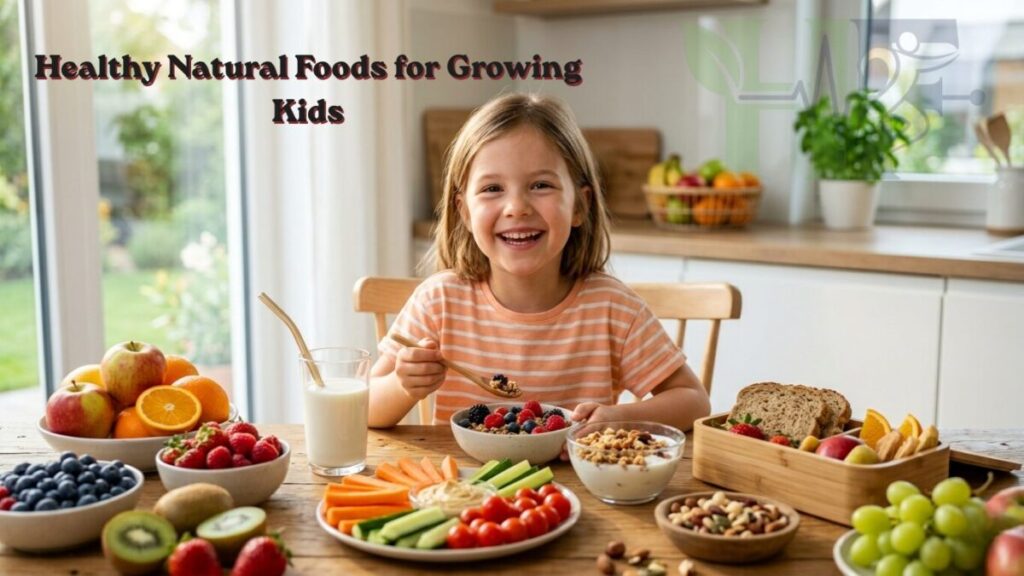
Fruits and vegetables are the cornerstone of any good kids nutrition plan. The trick is variety different colors mean different nutrients, so a rainbow plate is genuinely good advice, not just a cute idea.
Berries are especially worth mentioning. Blueberries, strawberries, and raspberries are loaded with antioxidants that support brain health. A handful of blueberries stirred into oatmeal or yogurt in the morning is one of the easiest wins you’ll ever get as a parent.
Leafy greens like spinach and kale can be sneaked into smoothies without kids even noticing. It sounds like a parenting cliché, but it genuinely works especially when blended with banana and mango.
Whole Grains Over Refined Carbs
Swap out white bread and regular pasta for whole grain versions. Oats in particular are a powerhouse: they provide slow-releasing energy, keep kids full longer, and support healthy digestion.
Brown rice, quinoa, and whole wheat wraps are other easy swaps that pack significantly more fiber and nutrients than their refined counterparts.
Eggs: One of the Most Complete Foods Available
Eggs deserve their own mention. They’re affordable, versatile, and genuinely packed with nutrients protein, healthy fats, choline (critical for brain development), and vitamin D. Whether scrambled, hard-boiled for a lunchbox, or folded into a veggie omelette, eggs are one of the best foods for child growth.
Legumes and Beans: Underrated Nutrition Powerhouses
Chickpeas, lentils, black beans, and kidney beans are rich in both protein and fiber. They’re also naturally filling, which means kids who eat them tend to snack less on junk later in the day. Hummus made from chickpeas is a great dip for veggies or whole grain crackers, and most kids genuinely enjoy it.
Dairy and Dairy Alternatives
Full-fat yogurt (especially plain Greek yogurt with a drizzle of honey) is excellent for children. It provides protein, calcium, and probiotics that support gut health. If your child is dairy-free, fortified plant-based options like oat milk or soy milk can provide similar nutrients.
Organic vs. Processed Snacks: What’s Actually Better?
The organic health food aisle can feel overwhelming. And honestly, not every organic product is automatically healthier an organic cookie is still a cookie.
That said, choosing organic for produce on the “dirty dozen” list (like strawberries, apples, and spinach) does reduce your child’s exposure to pesticide residues. For most parents, a balanced approach makes the most sense: prioritize organic for thin-skinned produce, and don’t stress about organic for everything else.
The bigger win is simply choosing whole or minimally processed foods over packaged snacks whenever possible. A piece of fruit beats a fruit-flavored snack bar almost every time.
Tips for Choosing the Right Natural Foods for Kids
This is where things get really practical. Knowing what’s healthy is one thing actually navigating grocery shopping, picky eaters, and busy weeknights is another.
Here are some genuinely useful strategies:
- Shop the perimeter of the grocery store first. Fresh produce, dairy, and proteins line the outer aisles. The center aisles are where most processed foods live.
- Read ingredient labels, not just nutrition facts. If a product has more than five ingredients and you can’t pronounce half of them, it’s probably worth skipping.
- Involve your kids in choosing foods. Kids who help pick out vegetables or fruit at the market are significantly more likely to actually eat them.
- Keep healthy snacks visible and accessible. A bowl of fruit on the counter, pre-washed grapes in the fridge, or sliced bell peppers ready to grab will get eaten more often than snacks that require preparation.
- Don’t make forbidden foods more attractive. Labeling food as “bad” or “never allowed” tends to backfire. A balanced, flexible approach where treats are occasional and normal creates a healthier long-term relationship with food.
- Look for variety over perfection. No single food has everything. A varied diet covering fruits, vegetables, proteins, whole grains, and healthy fats covers all the bases without any one food needing to be “perfect.”
- Consider natural food sources before supplements. Health food supplements can fill genuine gaps especially vitamin D in low-sunlight climates or iron for picky eaters but whole foods should always come first. If you’re unsure, a pediatrician can help identify actual deficiencies.
Smart Lunchbox Ideas Using Natural Foods
A lot of kids nutrition happens outside the home at school, at daycare, on the go. Lunchboxes are actually one of the easiest places to make consistently healthy choices without much fuss.
Some winning combinations that kids genuinely enjoy:
- Whole grain wrap with turkey, avocado, and shredded carrots
- Greek yogurt with fresh berries and a small handful of granola
- Hummus with cucumber slices, cherry tomatoes, and whole grain crackers
- Hard-boiled eggs with apple slices and a small portion of cheese
- Brown rice with black beans, corn, and mild salsa
These aren’t fancy. They don’t take an hour to prepare. But they’re genuinely nourishing, and most kids will eat them without complaint especially when the foods become familiar through repetition.
All Natural Snack Ideas for After School
The after-school window is when many kids reach for chips, candy, or whatever’s fastest. Having a few go-to all natural snack options ready makes it much easier to redirect toward something better.
Some of the best options:
- Apple slices with almond or peanut butter
- Trail mix with nuts, seeds, and a small amount of dark chocolate chips
- Smoothies made with frozen fruit, spinach, and yogurt
- Celery with hummus or nut butter
- A small bowl of edamame with a pinch of sea salt
- Whole grain toast with avocado and a sprinkle of everything bagel seasoning
The key is having these ready. A smoothie takes three minutes. Sliced apples take two. When healthy options are just as easy to grab as a bag of chips, kids will take them.
Common Mistakes Parents Make with Kids Nutrition
Even well-intentioned parents sometimes fall into patterns that don’t serve their kids’ health as well as they’d like.
One of the most common is relying too heavily on “kid-friendly” foods things like chicken nuggets, plain pasta, and sugary cereals because they’re easy and accepted. The problem is that this narrows kids’ palates over time, making it harder to introduce variety later.
Another mistake is using sweets as rewards. While it feels natural, this unintentionally teaches kids to value sugary foods above everything else.
Finally, many parents underestimate how much kids pick up from watching adults eat. Families who eat vegetables together tend to raise kids who eat vegetables. It’s one of the most powerful tools available, and it requires zero extra effort.
One parent shared on the Health Fitnesses community forum that simply eating the same dinner as her kids without making separate “kid food” was the single biggest shift that improved her children’s eating habits. Within a few weeks, her picky eaters were trying foods they’d previously refused, just because they saw their parents enjoying them.
Building Healthy Habits That Actually Last
Getting kids to eat well isn’t about one perfect meal. It’s about building an environment where natural, wholesome foods are the norm rather than the exception.
Some habits worth building early:
- Eating together as a family as often as possible
- Cooking simple meals at home more than relying on takeout
- Talking positively about food describing flavors, textures, and where food comes from
- Visiting farmers markets together to connect kids with real food sources
- Growing even a small herb garden or a few vegetables at home
These experiences shape how kids think about food for the rest of their lives.
Conclusion: Feeding Your Child Well Is One of the Greatest Gifts You Can Give
The journey toward healthy natural foods for your kids doesn’t require perfection. It doesn’t mean banning everything fun or spending a fortune on organic health food. It means making thoughtful, consistent choices and keeping the bigger picture in mind.
Foods for child growth and kids nutrition aren’t complicated at their core. Whole fruits and vegetables. Good protein sources. Whole grains. Healthy fats. Variety over time.
When you nourish your child with real, natural foods for children, you’re not just feeding their body today you’re teaching them how to take care of themselves tomorrow. That investment, made meal by meal, snack by snack, is worth every effort.
You’re doing more than you think. Keep going.