
General educational information. This article does not provide a diagnosis or a personal treatment plan. No medical review is claimed. Our medical review policy.
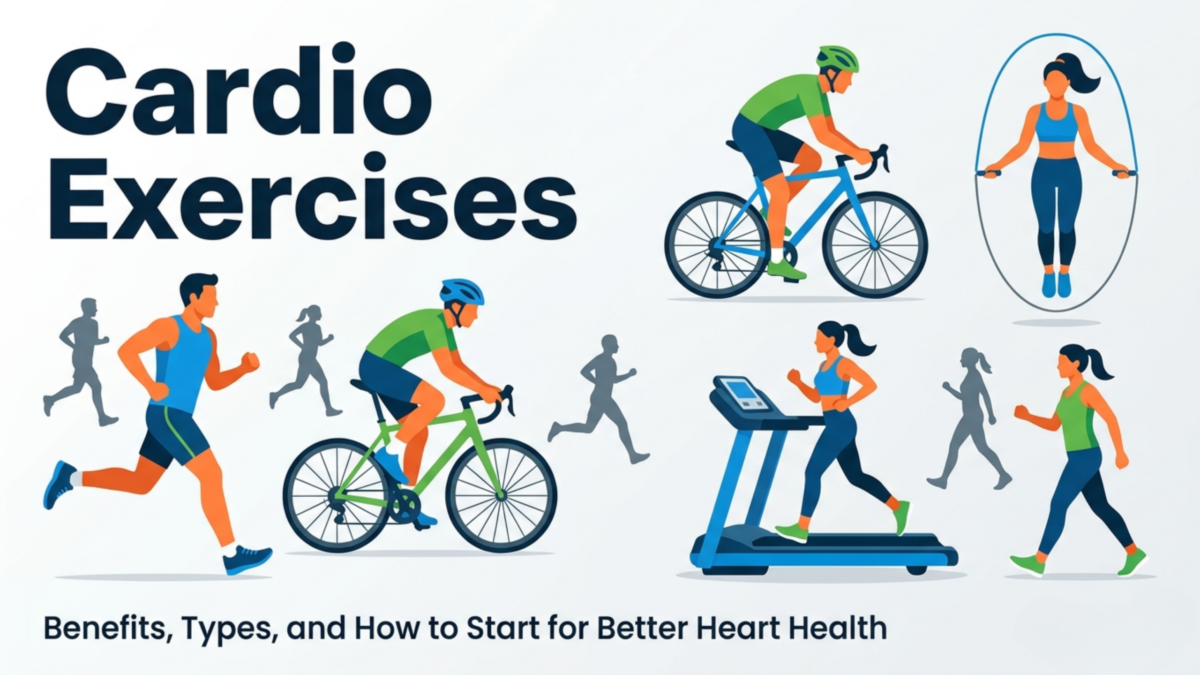
Cardiovascular exercise, commonly known as cardio, is one of the most effective ways to improve overall health, increase endurance, and support long-term wellness. Whether your goal is weight management, better heart health, improved stamina, or stress reduction, cardio exercises play a central role in maintaining a healthy lifestyle.
In today’s modern world, where sedentary habits and screen time are increasing, incorporating regular cardio activity into daily routines has become more important than ever. From brisk walking and cycling to swimming and high-intensity workouts, cardio exercises help strengthen the heart, improve circulation, and boost metabolic health.
This comprehensive guide explores the health benefits of cardio exercises, different types of cardio workouts, and practical tips to help beginners safely start a cardiovascular fitness routine.
What Are Cardio Exercises?
Cardio exercises are physical activities that increase your heart rate and breathing for a sustained period. These exercises stimulate the cardiovascular system, which includes the heart, lungs, and blood vessels.
When you perform cardio exercises, your heart pumps more blood and oxygen to working muscles. Over time, this improves cardiovascular efficiency, allowing your body to perform daily activities with less fatigue.
Common characteristics of cardio workouts include:
• Continuous rhythmic movements
• Increased heart rate and breathing
• Engagement of large muscle groups
• Sustained activity lasting several minutes or longer
Cardio training can be performed at different intensity levels, from light walking to high-intensity interval training (HIIT).
Major Health Benefits of Cardio Exercises
Regular cardiovascular exercise offers numerous physical and mental health benefits. Research consistently shows that people who perform regular cardio activities have lower risks of chronic diseases and better overall wellbeing.
Improves Heart Health
One of the most important benefits of cardio exercise is improved heart function. When you exercise regularly, the heart muscle becomes stronger and more efficient at pumping blood.
Benefits for heart health include:
• Improved blood circulation
• Lower resting heart rate
• Reduced blood pressure
• Decreased risk of heart disease and stroke
Strong cardiovascular health supports better oxygen delivery throughout the body.
Supports Weight Management
Cardio exercises burn calories and help regulate body weight. When combined with balanced nutrition, cardio can support fat loss and maintain a healthy body composition.
Activities such as running, cycling, and swimming increase energy expenditure, making them highly effective for individuals trying to lose or maintain weight.
Boosts Metabolism
Cardio training increases metabolic activity, helping the body burn energy more efficiently. Some forms of cardio, particularly interval training, can elevate metabolism for hours after exercise.
This metabolic boost supports fat burning and improved energy balance.
Enhances Lung Capacity
Regular aerobic exercise improves lung efficiency by strengthening respiratory muscles and increasing oxygen intake.
Improved lung function leads to:
• Better stamina
• Reduced breathlessness during activities
• Increased physical endurance
These benefits are especially valuable for individuals who want to improve athletic performance or general fitness.
Improves Mental Health
Cardio exercise is widely recognized for its mental health benefits. Physical activity stimulates the release of endorphins, often referred to as “feel-good hormones.”
These natural chemicals help:
• Reduce stress and anxiety
• Improve mood
• Enhance focus and concentration
• Promote better sleep quality
Regular cardio workouts are often recommended as part of a healthy lifestyle for managing stress and emotional wellbeing.
Types of Cardio Exercises
Cardio workouts can vary widely depending on fitness level, personal preference, and health goals. Some exercises are low impact, while others are more intense.
Here are some of the most effective cardio exercises.
Walking
Walking is one of the simplest and most accessible cardio exercises. It requires no special equipment and can be performed almost anywhere.
Benefits of walking include:
• Low injury risk
• Suitable for beginners
• Supports weight management
• Improves heart health
A brisk 30-minute walk daily can significantly improve cardiovascular fitness.
Running and Jogging
Running and jogging are high-intensity cardio exercises that provide excellent cardiovascular conditioning.
These activities help:
• Burn a large number of calories
• Improve stamina
• Strengthen leg muscles
• Enhance heart health
Beginners should start with short jogging intervals and gradually increase intensity.
Cycling
Cycling is another effective cardiovascular exercise that can be performed outdoors or on stationary bikes.
Benefits include:
• Strengthens lower body muscles
• Improves endurance
• Low impact on joints
• Supports heart health
Cycling is especially beneficial for individuals who want an effective workout with minimal joint stress.
Swimming
Swimming is a full-body cardio workout that engages multiple muscle groups simultaneously.
Advantages of swimming include:
• Low impact on joints
• Full-body conditioning
• Improved lung capacity
• High calorie burn
Because water supports body weight, swimming is ideal for people with joint pain or mobility limitations.
High-Intensity Interval Training (HIIT)
HIIT involves short bursts of intense exercise followed by brief recovery periods. This training method can significantly improve cardiovascular fitness in a shorter time.
Benefits include:
• Efficient calorie burning
• Increased metabolism
• Improved endurance
• Time-efficient workouts
HIIT workouts should be performed with proper guidance, especially for beginners.
How Much Cardio Exercise Do You Need?
Health experts recommend that adults perform regular aerobic activity to maintain optimal health.
According to global health guidelines:
• At least 150 minutes of moderate-intensity cardio per week, or
• 75 minutes of vigorous cardio activity weekly
Moderate exercises include brisk walking and casual cycling, while vigorous activities include running or HIIT workouts.
For additional health benefits, many experts recommend increasing activity levels beyond these minimum recommendations.
Tips for Starting a Cardio Exercise Routine
Starting a new fitness routine can feel challenging, but simple strategies can help make the process easier and more sustainable.
Start Slowly
Beginners should start with short workouts and gradually increase intensity and duration. Overtraining early can lead to fatigue or injury.
Choose Activities You Enjoy
Selecting enjoyable exercises increases the likelihood of maintaining a consistent routine. Some people prefer outdoor activities like cycling, while others enjoy gym workouts.
Maintain Consistency
Consistency is more important than intensity when building long-term fitness habits. Even moderate cardio performed regularly can produce significant health benefits.
Stay Hydrated
Proper hydration is essential during exercise. Drinking water before, during, and after workouts helps regulate body temperature and maintain performance.
Combine Cardio with Strength Training
A balanced fitness routine should include both cardiovascular exercise and strength training. This combination improves muscle tone, metabolism, and overall health.
Safety Tips for Cardio Workouts
Although cardio exercises are generally safe, certain precautions can help prevent injuries and improve results.
Important safety tips include:
• Always perform a warm-up before intense workouts
• Wear proper athletic footwear
• Maintain correct posture during exercise
• Allow recovery time between sessions
• Consult a healthcare professional if you have existing health conditions
Listening to your body and avoiding excessive strain is essential for long-term fitness success.
Conclusion
Cardio exercises are one of the most powerful tools for improving physical health, supporting mental wellbeing, and promoting long-term longevity. From simple activities like walking to more intense workouts such as running or HIIT training, cardiovascular exercise strengthens the heart, improves endurance, and helps maintain a healthy body weight.
Incorporating regular cardio activity into your lifestyle does not require extreme workouts or complicated routines. Even small, consistent steps such as daily walks or cycling sessions can significantly improve overall health.
By combining cardio exercise with balanced nutrition, quality sleep, and stress management, you create a strong foundation for a healthier and more active life.