
General educational information. This article does not provide a diagnosis or a personal treatment plan. No medical review is claimed. Our medical review policy.
Health and Energy
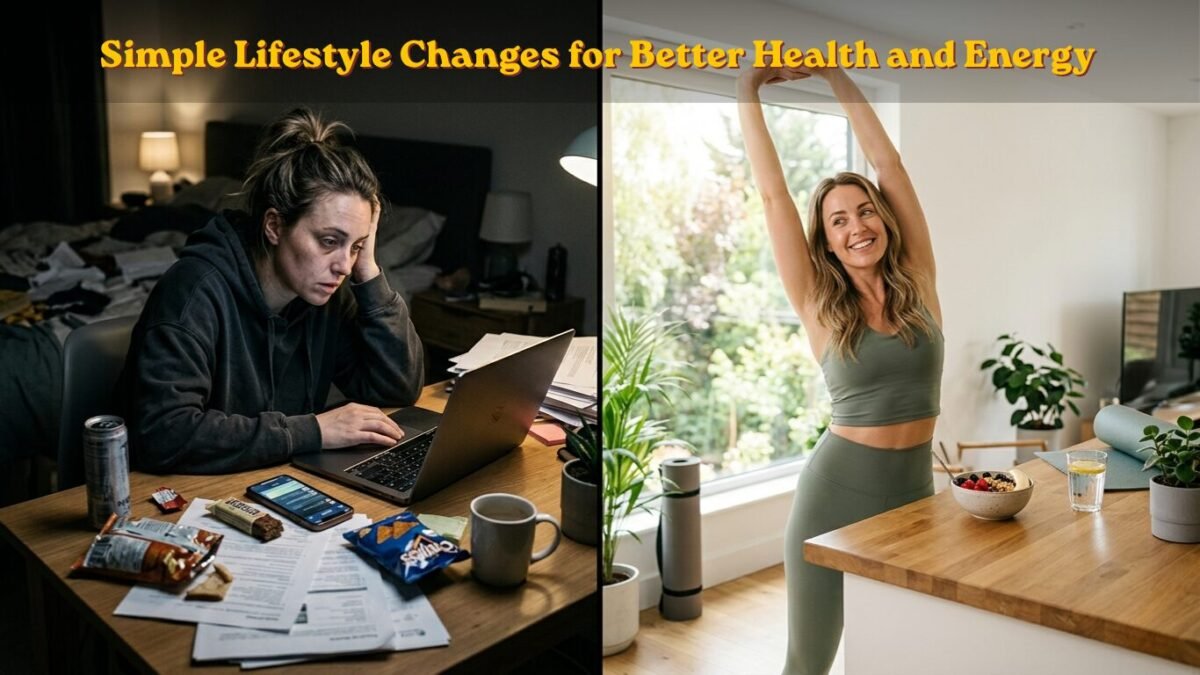
Most people don’t wake up one day and suddenly feel exhausted, sluggish, or heavier than they’d like. It sneaks up on you. One month you’re fine, and the next you’re dragging yourself through the afternoon, reaching for a third cup of coffee, and wondering why nothing seems to help.
Here’s the honest truth the root of most energy problems and unexplained weight gain isn’t some mystery medical condition. It’s the small, everyday habits that quietly work against you. And the good news? Making simple lifestyle changes for better health doesn’t require an overhaul of your entire life. It just requires knowing where to look.
Why You’re Tired All the Time The Hidden Causes of Fatigue
Fatigue is probably the most common complaint people bring up when talking about health. And yet, it’s also one of the most misunderstood.
Most of us assume tiredness comes from not sleeping enough. Sometimes that’s true. But a lot of the time, people are sleeping seven or eight hours and still waking up feeling like they haven’t rested at all. That’s a different problem and it has different solutions.
You’re Eating the Wrong Things at the Wrong Time
Food affects energy more than most people realize. A big plate of pasta at lunch might feel satisfying, but the blood sugar spike followed by the crash an hour later is what’s making you feel like you need a nap at 2 p.m.
Refined carbohydrates white bread, sugary cereals, pastries digest fast and hit your bloodstream quickly. That gives you a short burst of energy followed by a sharp dip. Over time, this cycle trains your body to crave more sugar just to keep going.
Switching to slower-digesting foods like oats, lentils, eggs, and nuts makes a noticeable difference. It’s not about eating less. It’s about eating smarter.
Dehydration Is Quietly Draining You
Even mild dehydration the kind where you don’t feel particularly thirsty can reduce concentration, increase fatigue, and tank your mood. Studies consistently show that losing just 1 to 2 percent of body water affects mental performance.
Here’s a simple test: if your urine is darker than pale yellow, you probably need more water. Most people are walking around in a state of low-grade dehydration every day and don’t connect it to how they feel.
Start your morning with a full glass of water before anything else. Keep a bottle on your desk. It sounds boring because it is but it works.
Your Breathing and Posture Matter More Than You Think
This one surprises people. Sitting hunched over a screen all day compresses your diaphragm and reduces oxygen intake. Less oxygen means your body has to work harder to do the same things. That translates directly into fatigue.
Just sitting up straight and taking a few slow, deep breaths every hour makes a real difference. It sounds too simple to be meaningful, but a lot of natural energy fixes are like that simple and underestimated.
The Daily Habits That Lead to Weight Gain (And How to Fix Them)
Weight gain rarely happens because of one dramatic thing. It’s the accumulation of small decisions made repeatedly a handful of chips while watching TV, skipping breakfast and then overeating at lunch, ordering in four times a week because cooking feels like too much effort.
Eating in a Distracted State
This is a big one. Eating while scrolling your phone, watching Netflix, or sitting at your work desk means your brain isn’t fully registering that you’re eating. Satiety signals the ones that tell you you’re full take about 20 minutes to kick in. If you’re distracted, you’ll eat past them every time.
Sitting down for meals, even briefly, without a screen in front of you helps. You eat slower, chew more, and actually notice when you’re satisfied rather than stuffed.
Not Enough Protein at Breakfast
Skipping breakfast or eating something sugary (like a muffin or flavored yogurt loaded with sugar) sets you up for hunger and cravings the rest of the day. Protein at breakfast eggs, Greek yogurt, cottage cheese, a protein smoothie keeps you fuller longer and reduces the likelihood of overeating later.
This isn’t about cutting carbs. It’s about making sure your first meal actually sustains you.
Too Much Sitting, Not Enough Movement
You don’t need to run a marathon. But if you sit for eight-plus hours a day and the only movement you get is a 45-minute workout three times a week, that’s still a lot of inactivity. The body responds to consistent low-level movement throughout the day short walks, standing, stretching just as much as it responds to structured exercise.
A 10-minute walk after lunch does more for your metabolism and blood sugar regulation than you’d expect.
A Quick Look at What’s Helping vs. What’s Hurting
Here’s a simple breakdown of common daily habits and their impact on your health and energy:
| Habit | Effect on Energy | Effect on Weight |
|---|---|---|
| Sleeping 7–9 hours consistently | Significantly boosts energy | Helps regulate hunger hormones |
| Eating mostly processed foods | Causes energy crashes | Promotes fat storage |
| Drinking 8+ glasses of water daily | Reduces mental fog and fatigue | Can reduce overeating |
| Sitting 8+ hours without breaks | Increases tiredness and tension | Slows metabolism over time |
| Eating protein at breakfast | Sustains energy through the morning | Reduces cravings later in the day |
| Skipping meals | Short-term alertness, followed by crash | Often leads to overeating |
| Regular short walks throughout the day | Improves mood and circulation | Burns steady calories over time |
Simple Lifestyle Changes for Better Health You Can Start This Week
Here’s the thing about healthy habits they don’t need to be dramatic to work. The ones that stick are usually the ones that fit quietly into your existing life.
A few things worth trying:
- Go to bed and wake up at the same time every day, even on weekends. Your body runs on a clock, and messing with it even two days a week disrupts your sleep quality for the whole week.
- Eat more whole foods, not fewer calories. Restriction tends to backfire. Filling your plate with vegetables, whole grains, lean proteins, and healthy fats naturally crowds out the junk.
- Get outside in the morning. Sunlight in the first hour after waking helps set your circadian rhythm and has a measurable effect on mood and energy throughout the day.
- Limit alcohol on weekdays. Even one or two drinks disrupt sleep architecture, meaning you spend less time in deep, restorative sleep. You might not feel “hungover,” but the sleep quality hit is real.
- Cook at home more than you eat out. Restaurant food and takeout tend to be higher in sodium, sugar, and calories than what you’d make yourself even when you’re ordering something that sounds healthy.
Tips for Building Better Daily Habits
The hardest part of changing your habits isn’t knowing what to do it’s actually doing it consistently. These are some approaches that tend to work for real people with real schedules:
Start smaller than you think you need to. Wanting to exercise more? Start with 10 minutes a day. Wanting to eat better? Swap one meal a week. The goal isn’t perfection from day one. The goal is not quitting.
Attach new habits to existing ones. If you already make coffee every morning, do 5 minutes of stretching while it brews. If you always sit down for lunch, use that as your cue to drink a full glass of water first. Pairing a new behavior with an established one removes the need for willpower.
Track something small. You don’t need an elaborate system. Even writing down what you ate, how many steps you took, or how you felt that day creates awareness. And awareness is the first step to change.
Don’t let one bad day become a bad week. This is probably the most important one. Most people abandon new habits not because the habits were wrong but because they slipped up once, felt like a failure, and stopped altogether. One off day is noise. What matters is what you do the next morning.
Find one person who’s doing what you want to do. It doesn’t have to be a formal accountability partner. It could be following someone on social media, reading a health blog you enjoy, or sharing your goals with a friend. Being around people who are interested in healthy lifestyle habits makes it easier to stay consistent.
This is actually something I came across while reading through content on Health Fitnesses there was a piece about habit stacking and why identity-based motivation tends to outlast willpower-based motivation. The idea is that instead of saying “I’m trying to eat better,” you shift to “I’m someone who takes care of how they eat.” Small reframe, but it changes how you respond when temptation shows up.
How to Improve Energy Naturally Without Supplements or Fads
The wellness industry makes a lot of money selling the idea that energy comes in a bottle. And while some supplements have legitimate use, most people don’t need them they just need to fix the basics.
Magnesium is one exception worth mentioning. A large portion of the population is deficient, and magnesium plays a direct role in sleep quality, muscle function, and stress regulation. Getting it from food (pumpkin seeds, spinach, dark chocolate, almonds) is ideal, but a basic supplement at night doesn’t hurt.
B vitamins are another one, particularly B12 if you don’t eat much meat or dairy. B12 deficiency is a genuine cause of fatigue and is easy to miss without a blood test.
But beyond those specifics, the most reliable ways to improve energy naturally come back to the same basics: sleep, movement, hydration, and real food. There’s no shortcut that reliably outperforms getting those four things right.
Simple Lifestyle Changes for Better Health: Where to Go From Here
If you’ve made it this far, you probably recognize yourself somewhere in this article. Maybe it’s the afternoon crash, maybe it’s the slow weight gain you can’t quite explain, maybe it’s just feeling less like yourself than you used to.
The point isn’t to overhaul everything at once. It’s to pick one thing just one and do it consistently for two weeks. Drink more water. Go to bed earlier. Eat protein at breakfast. Walk after lunch. Something small, done repeatedly, until it stops feeling like effort.
Making simple lifestyle changes for better health and energy doesn’t require a new year, a Monday, or a dramatic life event. It just requires starting. And that part is entirely up to you.
Published on Health Fitnesses | Wellness, Habits & Real-Life Health Advice