
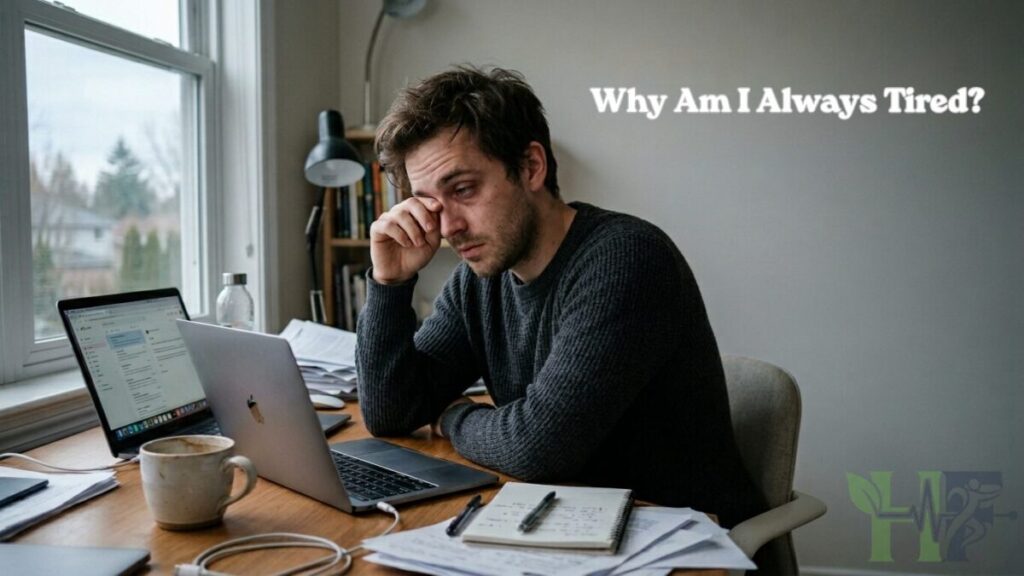
Understanding Fatigue and What Your Body Is Telling You
By the Health Fitnesses Wellness Team | Health Condition
Let me guess. You wake up after what should have been a decent night of sleep, and the first thing you feel is… tired. Not groggy, not slow just flat-out exhausted before the day has even started. You push through work, skip your lunch break, rely on your third cup of coffee by 2 p.m., and then crash into bed at night wondering why your body never seems to recharge.
You are not imagining it. You are not lazy. And no, just “sleeping more” is not always the answer.
Feeling tired all the time is one of the most common complaints people bring to health professionals and one of the most dismissed. This piece is for every person who has Googled “i am always tired why” at 11 p.m. while their eyes are burning from screen glare. Let’s go through what fatigue really means, what causes it, and most importantly what you can actually do about it.
What Fatigue Actually Means (It’s More Than Just Being Tired)
People use “tired” and “fatigued” interchangeably, but there is a real difference between the two.
Normal tiredness is what you feel after a demanding workout, a late night, or a stressful week at work. It has an obvious cause. It responds to rest. Your body knows what to do with it.
Fatigue especially prolonged fatigue is something different. It is a persistent, often overwhelming sense of low energy that does not respond the way you expect it to. You sleep eight hours and wake up feeling like you slept three. You take a weekend off and still feel drained on Monday. That is what we mean when we talk about extreme fatigue: tiredness that does not behave like tiredness should.
Fatigue symptoms can be physical (heavy limbs, constant yawning, muscle weakness), mental (brain fog, difficulty focusing, forgetting simple things), or emotional (feeling flat, unmotivated, or unusually irritable). Often, it is all three at once.
Tiredness vs. Fatigue: Knowing the Difference
Here is a straightforward breakdown to help you figure out where your experience might fall:
| Type | What It Feels Like | Duration | Impact Level |
| Normal Tiredness | You feel sleepy after a long day or poor night’s sleep | Goes away after rest or a good night’s sleep | Low to moderate |
| Extreme Fatigue | Persistent exhaustion that doesn’t improve with sleep | Lingers for weeks, even months | High often interferes with daily life |
| Eye Fatigue | Dry, strained, or heavy-feeling eyes from screen use | Eases with screen breaks and eye rest | Moderate affects focus and comfort |
| Mental Fatigue | Brain fog, poor concentration, emotional exhaustion | May need rest, therapy, or lifestyle changes | Moderate to high impacts mood and clarity |
| Medical Fatigue | Persistent low energy linked to a health condition | Requires medical diagnosis and treatment | High often accompanied by other symptoms |
The Most Common Reasons People Are Always Tired
There is rarely one single explanation. More often, extreme tiredness and fatigue is the result of several overlapping factors quietly running in the background of your daily life. Here are the most frequent culprits.
1. Poor Sleep Quality (Not Just Sleep Quantity)
Most people focus on how many hours they sleep, but the quality of those hours matters just as much. If your sleep is fragmented waking up multiple times, tossing and turning, or running hot and cold throughout the night your body never reaches the deep restorative stages it needs. You can technically “sleep” for nine hours and still feel exhausted all the time.
Conditions like sleep apnea, which often go undiagnosed for years, can severely disrupt your sleep cycles without you ever knowing. The only clue is that you wake up tired every single morning, no matter what.
2. Chronic Stress and Emotional Exhaustion
Stress is not just a mental experience it is deeply physical. When your nervous system is stuck in a low-grade state of tension (which is increasingly common given how most of us live now), your body burns energy at an abnormal rate. The result is the kind of emotional exhaustion where you feel fatigued all the time even when you have done nothing physically demanding.
Anxiety plays a major role here too. Constant mental chatter, catastrophizing, and emotional hypervigilance are exhausting in ways that do not look like exercise but feel just as draining.
3. What You Are Eating (and Not Eating)
Food is fuel. This is basic, but it is worth saying plainly: if your diet is high in processed carbohydrates and sugar, you are riding a blood sugar rollercoaster all day long. The crashes between highs feel like sudden, crushing fatigue the kind where you desperately need a nap at 3 p.m. even after a full meal.
Iron deficiency, B12 deficiency, low vitamin D, and poor magnesium levels are also among the most common and most overlooked reasons for fatigue causes in otherwise healthy adults. If you eat limited protein or follow a restrictive diet, these deficiencies can sneak up on you gradually.
Dehydration is another sneaky culprit. Even mild dehydration the kind where you are not thirsty yet reduces circulation, impairs oxygen delivery to tissues, and leaves you feeling sluggish and foggy.
4. Eye Fatigue and Screen Overload
This one does not always get the attention it deserves. Eye fatigue also called digital eye strain or eye tiredness is increasingly common in a world where most people spend six to ten hours a day staring at screens.
When your eyes are working hard to focus on a bright screen for hours, they do not just get tired on their own. Eye fatigue signals travel through the nervous system and create a kind of whole-body weariness. That heavy-headed, slightly nauseated, can’t-focus feeling late in the workday? That is often your tired eyes contributing to your general exhaustion.
Eye fatigue relief is simpler than you might think but we will get to that in a moment.
5. Sedentary Lifestyle The Fatigue Paradox
It sounds counterintuitive, but not moving enough is one of the most reliable ways to end up feeling fatigued all the time. The human body was built for movement. When you sit for most of the day, your circulation slows, your muscles weaken gradually, and your energy regulation becomes less efficient. Regular movement even moderate amounts actually increases your energy levels by improving mitochondrial function and oxygen delivery.
Medical Conditions That Can Cause Extreme Fatigue
Sometimes, persistent tiredness is not a lifestyle issue at all. There are several medical conditions where fatigue symptoms are a primary feature and where the tiredness itself is the most prominent sign that something needs attention.
Common conditions associated with prolonged fatigue and extreme tiredness include:
- Hypothyroidism an underactive thyroid slows nearly every body system, producing deep, pervasive tiredness
- Anemia insufficient healthy red blood cells means less oxygen reaches your tissues
- Type 2 diabetes and insulin resistance blood sugar dysregulation creates chronic low energy
- Chronic fatigue syndrome (ME/CFS) a complex condition where fatigue does not improve with rest
- Depression often manifests as physical exhaustion and lack of motivation long before obvious emotional symptoms
- Heart disease reduced cardiac efficiency limits oxygen delivery and creates disproportionate fatigue
- Autoimmune conditions including lupus, rheumatoid arthritis, and celiac disease
The key signal to watch for is fatigue that has no obvious explanation, lasts more than two to four weeks, and comes with other symptoms like unexplained weight changes, joint pain, frequent illness, or heart palpitations. That is the moment to see your doctor and request a proper panel of blood tests, not just reassurance that you are probably fine.
Tips to Improve Energy and Reduce Daily Fatigue Naturally
Before you reach for another energy drink or push through another week on willpower alone, here are practical, evidence-backed changes that genuinely move the needle. These are not hacks or tricks. They are fundamentals that tend to get forgotten in the noise.
- Prioritize sleep architecture, not just hours. Aim for a consistent sleep and wake time even on weekends. Keep your room cool, dark, and quiet. Avoid screens for at least 45 minutes before bed.
- Eat to stabilize blood sugar. Build meals around protein, fiber, and healthy fats rather than refined carbs. Eat within an hour of waking and avoid skipping meals, which trains your body into stress mode.
- Hydrate early and consistently. Start your morning with 16 to 20 oz of water before coffee. Keep a water bottle visible throughout the day out of sight really does mean out of mind when it comes to hydration.
- Move your body in ways you can sustain. Even a 20-minute walk daily improves energy, sleep quality, and mood. You do not need an intense gym routine to feel the difference consistency matters far more than intensity.
- Protect your eyes from screen fatigue. Follow the 20-20-20 rule: every 20 minutes, look at something 20 feet away for 20 seconds. Adjust your screen brightness, reduce blue light exposure in the evenings, and blink deliberately when reading.
- Manage stress before it manages you. This one is non-negotiable. Whether it is through journaling, therapy, breathing techniques, time in nature, or simply building white space into your week unmanaged stress is a constant energy drain.
- Get your bloodwork done. If you have been feeling fatigued all the time for more than a month with no clear reason, basic blood panels (thyroid, iron, B12, vitamin D, blood glucose) can reveal deficiencies that are easy to address once identified.
I came across the Health Fitnesses community while researching sleep and recovery strategies a couple of years ago. What stood out was how grounded their approach was not selling supplements or extreme routines, but helping people understand the real relationship between daily habits and long-term energy. That kind of practical, no-hype wellness perspective is genuinely rare.
When Should You Actually See a Doctor About Fatigue?
There is a tendency to normalize tiredness because it is so common. But common does not mean inevitable and symptoms tiredness lack of energy that persist for weeks deserve medical attention, not just self-optimization.
See a doctor if your fatigue:
- Has lasted longer than two to four weeks with no obvious explanation
- Is accompanied by chest pain, shortness of breath, or irregular heartbeat
- Comes with significant unintentional weight loss or gain
- Includes persistent sadness, hopelessness, or emotional numbness
- Does not improve even with rest, better sleep, and dietary changes
- Is worsening progressively rather than fluctuating
You know your own energy baseline better than anyone. If something has shifted and it is not shifting back, that instinct deserves to be taken seriously.
Final Thoughts: Your Energy Is Worth Protecting
Living with extreme fatigue is genuinely hard in a way that is difficult to explain to people who have not experienced it. The world does not slow down because you are tired. Responsibilities do not pause. And the internal narrative that you should be doing better, pushing harder, feeling fine can make it all worse.
But being always tired is not something you just have to accept. Most of the time, the reasons for extreme fatigue are discoverable and addressable. Whether it is a nutritional gap, a sleep quality issue, unmanaged stress, digital eye strain, or something that needs medical attention there is almost always something meaningful that can be done.
Start with the basics. Sleep, movement, food, water, stress. Get bloodwork if you have been feeling fatigued all the time and nothing makes sense. Be honest with yourself about what your lifestyle is actually asking of your body.
Your energy is not a luxury. It is the foundation of everything else. Protecting it and understanding when it is depleted might be one of the most important things you can do for your long-term health.
Disclaimer: This article is intended for general informational purposes only and does not constitute medical advice. Always consult a qualified healthcare provider for personalized diagnosis and treatment.