
Published by Health Fitnesses | Natural Food & Wellness
You brushed your teeth, made your morning coffee, grabbed what felt like a reasonable breakfast, and headed into your day. Nothing unusual. Nothing alarming. But here’s something that might stop you mid-sip: some of the foods sitting on your kitchen counter right now, the ones you reach for without thinking, are quietly working against you.
This isn’t about fear-mongering or turning every meal into a science experiment. It’s about awareness. Because the truth is, everyday foods harming your health rarely look dangerous. They come in familiar packaging, carry reassuring labels, and taste exactly like what you grew up eating. That’s what makes them so easy to overlook.
Let’s talk about what’s actually going on inside your pantry, and what you can do about it.
Why Some Everyday Foods Are More Dangerous Than They Look
Most people imagine unhealthy food as obvious junk. Fried chicken. Soda. Candy bars. But the more insidious problem is the foods that fly under the radar because they’ve been marketed well, or because we’ve simply always eaten them.
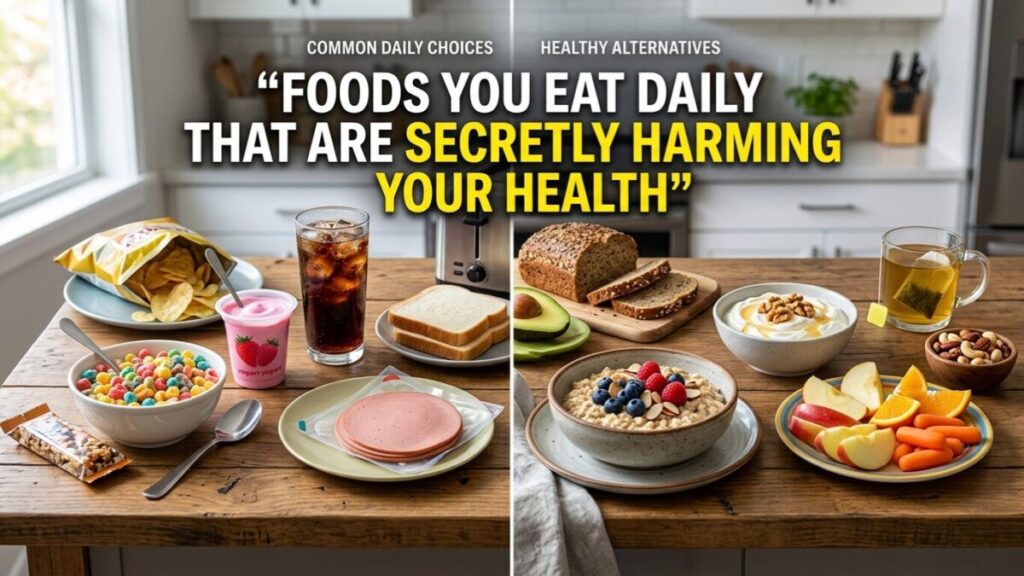
Think about flavored yogurt. On the surface, it seems like a smart, protein-rich snack. But flip the container and look at the sugar content. A single serving can carry 20 to 25 grams of added sugar, which is more than half the daily recommended limit for most adults. Nobody thinks of strawberry yogurt as a dessert, but nutritionally, that’s often what it is.
The problem goes deeper than sugar. Many everyday foods harming your health do so through a combination of refined ingredients, chemical additives, and processing techniques that strip out nutrients while adding things your body doesn’t know how to handle well. Over time, the damage adds up silently.
Hidden Unhealthy Foods Found in Most Homes
The Bread That’s Not Really Bread
Most commercially made white or “wheat” bread is produced so quickly and with so many additives that it barely resembles traditional bread. It spikes blood sugar fast, offers little fiber, and often contains dough conditioners and preservatives that your gut bacteria are not fans of.
A lot of people don’t realize how many hidden unhealthy foods live in the bread aisle. Even loaves labeled “multigrain” or “natural” can be mostly refined flour with a sprinkle of seeds for appearance.
Breakfast Cereals
This one stings because cereal feels like a wholesome start to the day. Many popular cereals, including ones marketed to children and fitness-focused adults, are loaded with refined carbs, added sugars, and synthetic vitamins that don’t absorb the same way naturally occurring ones do.
A bowl of cereal can trigger a blood sugar crash by mid-morning, leaving you hungry, foggy, and reaching for more processed food to compensate.
Cooking Oils
Vegetable oil, canola oil, sunflower oil. These are staples in nearly every kitchen. But most of them are heavily refined and high in omega-6 fatty acids. When consumed in large amounts without enough omega-3s to balance things out, they can contribute to systemic inflammation. More on that shortly.
Fake Healthy Foods That Secretly Harm Your Body
The fake healthy foods list is longer than most people expect. These are products that carry health halos, words like “low fat,” “whole grain,” “organic,” or “natural” that signal virtue without necessarily delivering it.
Granola bars are a perfect example. Most store-bought granola bars are essentially candy bars with oats on top. The binding agents, chocolate chips, and sweeteners push the sugar content into dessert territory.
Fruit juices, even 100% juice with no added sugar, deliver a flood of fructose without the fiber that makes eating whole fruit manageable for your body. Your liver processes that fructose, and in large amounts, it behaves more like a sugary drink than a health food.
Low-fat products deserve special mention. When manufacturers remove fat, they usually add sugar, starch, or artificial thickeners to compensate for lost flavor and texture. The result is often something that spikes insulin more aggressively than the full-fat original would have.
Foods affecting metabolism are often the ones we trust most, which is exactly why they’re worth scrutinizing.
Foods Causing Inflammation Naturally
Inflammation is your immune system doing its job. Short-term, it’s protective. Long-term, it’s linked to everything from joint pain and brain fog to serious chronic conditions like type 2 diabetes and cardiovascular disease.
Several everyday foods causing inflammation naturally are worth pulling back on:
- Refined sugar and high-fructose corn syrup feed inflammatory pathways and appear in far more products than most people realize, including salad dressings, pasta sauces, and crackers.
- Refined carbohydrates like white rice, white pasta, and pastries are digested rapidly and can trigger inflammatory responses through blood sugar spikes.
- Processed meats such as deli turkey, hot dogs, and packaged sausages contain nitrates and high levels of sodium that research consistently links to increased inflammation markers.
- Artificial trans fats, though largely banned in many countries, still appear in some imported products and anything containing “partially hydrogenated oil.”
- Alcohol, even in moderate amounts, can disrupt gut bacteria and promote inflammation in the intestinal lining over time.
The irritating part is that these are foods most of us eat on a completely normal Tuesday. That’s the whole point of calling them silent health damaging foods.
Harmful Foods for Gut Health
Your gut is often called your second brain, and for good reason. An enormous portion of your immune function, mood regulation, and nutrient absorption depends on a healthy microbiome. Harmful foods for gut health chip away at that system, often without obvious immediate symptoms.
Artificial sweeteners like aspartame, saccharin, and sucralose are processed foods to avoid if gut health is a priority. Several studies have found they alter the composition of gut bacteria in ways that can reduce metabolic health and impair glucose tolerance, which is deeply ironic given that many people use them to manage weight and blood sugar.
Highly processed snack foods, the chips, crackers, and packaged cookies that make up so many people’s afternoon habits, tend to be low in fiber and high in emulsifiers. Emulsifiers are added to extend shelf life and improve texture, but some research suggests they erode the mucus layer that protects the gut lining.
Excessive alcohol disrupts the delicate balance of bacteria in the gut, often reducing beneficial species while allowing harmful ones to flourish.
A Quick Comparison: Harmful Daily Foods vs. Better Alternatives
| Harmful Daily Food | Why It’s Harmful | Better Natural Alternative |
| Flavored yogurt | High in added sugar, low in real fiber | Plain Greek yogurt with fresh fruit |
| White bread | Spikes blood sugar, minimal nutrients | Sourdough or sprouted grain bread |
| Vegetable/canola oil | High in omega-6s, promotes inflammation | Extra virgin olive oil or avocado oil |
| Breakfast cereal | Refined carbs, synthetic vitamins, high sugar | Rolled oats with nuts and seeds |
| Fruit juice | Sugar spike without fiber buffer | Whole fruit or water with lemon |
| Deli meats | Nitrates, high sodium, inflammatory | Freshly cooked chicken or turkey breast |
| Margarine | May contain trans fats, ultra-processed | Grass-fed butter or coconut oil |
| Low-fat salad dressing | Added sugar and starch to replace fat | Olive oil and apple cider vinegar |
Better Natural Alternatives for Daily Eating
Switching everything overnight rarely works. Most people who try radical dietary overhauls fall back into old habits within a few weeks because the change feels too big and too punishing.
The more effective approach is substitution, not elimination. Swap one thing at a time. Try cooking with olive oil instead of vegetable oil for a week. Replace your morning cereal with a simple bowl of oats topped with walnuts and blueberries. Choose whole fruit over juice. These aren’t dramatic gestures, but they compound.
Whole, minimally processed foods naturally crowd out the problematic ones when you make them easy to access. Keep a bowl of fruit on the counter. Pre-wash salad greens so they’re ready to use. Cook grains in batches. The friction of eating well goes way down when the food is already prepared.
Tips for Choosing Healthier Daily Foods
Navigating food labels and grocery store marketing takes practice, but a few principles make it much easier:
- Read the ingredient list, not just the nutrition panel. If you can’t pronounce most of what’s on the list, that’s a signal to put it back.
- The shorter the ingredient list, the better. Real food doesn’t need ten stabilizers and three types of sugar to taste good.
- Be skeptical of health claims on packaging. “Made with whole grains” doesn’t mean whole grains are the primary ingredient. “Low fat” doesn’t mean low sugar or low calorie.
- Cook more of your own food. Even simple home cooking gives you full control over what goes into your meals. You’re not a chef. You don’t need to be. A pan of roasted vegetables and a piece of fish is not complicated.
- Shop the perimeter of the grocery store. Produce, proteins, and dairy line the edges. The middle aisles are where most processed foods to avoid tend to live.
- Don’t demonize all fats. Avocado, nuts, olive oil, and fatty fish are your friends. They keep you full, support brain function, and help your body absorb fat-soluble vitamins.
- Watch what you drink. Calories from beverages are easy to overlook. Juice, flavored coffee drinks, sports drinks, and alcohol can add hundreds of empty calories without registering as “food” in your mind.
One reader at Health Fitnesses shared that after simply swapping their cooking oils and cutting out daily fruit juice, their digestion improved noticeably within two weeks. Not a dramatic overhaul, just two targeted changes. That’s how this tends to work.
Conclusion: Everyday Foods Harming Your Health Deserve Your Attention
Here’s what it comes down to. Everyday foods harming your health are not lurking in dark corners of the grocery store. They’re in your pantry right now, labeled with words that sound trustworthy, priced affordably, and woven into daily habits you formed years ago.
The processed cereals, the flavored yogurts, the cooking oils, the fake-healthy snack bars. None of them will destroy you in a single sitting. But eaten daily, without awareness, they quietly promote inflammation, disrupt your gut, interfere with your metabolism, and nudge your body toward conditions that take years to manifest and are much harder to reverse than to prevent.
The good news is that awareness is genuinely powerful. You don’t need a perfect diet. You need a more informed one. Swap a few things. Read more labels. Cook a bit more. Give your gut bacteria something worth working with.
Your body has an extraordinary ability to respond to better inputs. Start small. Stay consistent. And don’t underestimate how much the everyday choices, the ones that feel invisible precisely because they’re so routine, end up shaping how you feel, how you think, and how long you thrive.
Health Fitnesses is dedicated to sharing honest, practical guidance on natural food and wellness. No miracle cures, no extreme diets. Just clear information to help you make better choices, one meal at a time.