
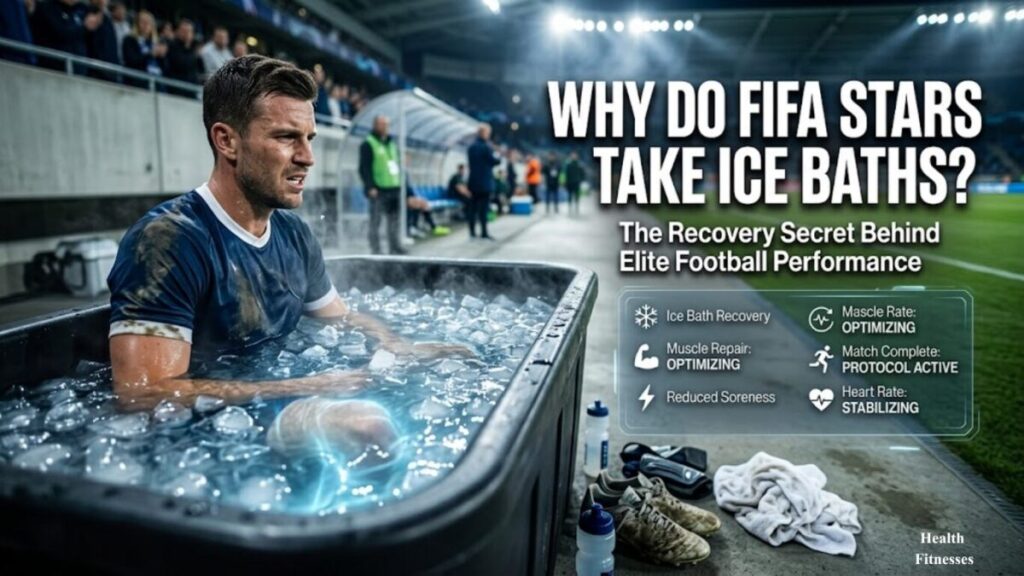
Within minutes of the final whistle, World Cup players head straight from the pitch to a tub of ice-cold water. It isn’t a punishment or a superstition it’s a deliberate recovery tool. Cold water immersion, typically between 10°C and 15°C for around ten to fifteen minutes, narrows and then reopens blood vessels in the legs, which helps clear waste products from tired muscle tissue, blunts next-day soreness, and calms the swelling that builds up after ninety-plus minutes of sprinting, jumping, and physical contact. For a squad that may play every three to four days across a month-long tournament, that head start on recovery can be the difference between starting the next match fresh or carrying fatigue into it.
What Happens Inside the Body During an Ice Bath
An ice bath is really a stress test for the circulatory system, and the body’s response to that stress is where the recovery benefit comes from.
Vasoconstriction and Vasodilation Explained
The moment a player’s legs hit cold water, blood vessels near the skin and in the working muscles constrict a process called vasoconstriction. Blood is pushed away from the limbs and toward the body’s core to protect vital organs from the temperature drop. Once the player steps out and the body starts to rewarm, those same vessels widen again (vasodilation), and blood rushes back into the muscles. That alternating squeeze-and-release action works like a pump, and sports physiologists consider it the central mechanism behind most of the recovery effects players report.
Flushing Out Metabolic Waste and Reducing Swelling
Ninety minutes of high-intensity running produces microscopic tears in muscle fibers along with a build-up of metabolic by-products, including lactate. The vasodilation phase after an ice bath increases blood flow back into the legs, which is thought to help carry these by-products away and deliver oxygen- and nutrient-rich blood to begin the repair process. The cold also has a direct numbing effect on nerve endings and slows local swelling, which is why players often describe feeling less “heavy” or achy within a day of using an ice bath compared with skipping recovery altogether.
Why World Cup Players Need Recovery More Than Most Athletes
The Physical Toll of a 90-Minute Match
An elite outfield player covers roughly 10 to 13 kilometers per match, much of it at sprint or near-sprint pace, with dozens of sudden accelerations, decelerations, and changes of direction. Add in tackles, aerial duels, and collisions, and the cumulative muscular and joint stress of a single World Cup match is significant closer to running a half marathon with the added strain of constant contact and explosive movement.
A Congested Tournament Calendar
Unlike a domestic league season with a match roughly once a week, a World Cup can compress several games into a two-to-three-week group stage, followed by knockout fixtures on similarly short turnarounds. Medical and performance staff have far less time than usual to let inflammation settle naturally, which is exactly why recovery tools like ice baths, compression garments, and structured sleep protocols become a daily habit rather than an occasional treatment during the tournament.
Numbing Muscle Soreness (DOMS)
Delayed onset muscle soreness, or DOMS, usually peaks 24 to 48 hours after intense exercise and is linked to the small muscle-fiber damage that occurs during hard sprinting and repeated changes of direction. Because cold water slows the speed at which nerves transmit pain signals, players often feel an immediate numbing effect that takes the edge off post-match discomfort. Combined with reduced local swelling, this is one of the most consistently reported benefits players and physiotherapists describe, even though researchers note the effect on long-term muscle damage markers is more modest than the perceived relief suggests.
Protecting Joints and Preventing Injury
Ankles, knees, and hips absorb enormous repeated impact over a match, especially on artificial or firm pitches common at some tournament venues. Reducing swelling around joints after a match is thought to help maintain a fuller, more comfortable range of motion heading into the next training session, which lowers the chance of a player compensating with poor movement patterns that can lead to strains or overuse injuries. Ice baths are one part of a broader injury-prevention routine that typically also includes mobility work, strength maintenance, and careful training-load management between matches.
The Psychological Edge
There’s a mental component to ice baths that’s easy to overlook. Deliberately enduring two or three minutes of genuine discomfort builds a form of mental toughness that some sports psychologists link to composure under pressure the same ability to stay calm and controlled that a player needs during a penalty shootout or a tense final ten minutes. Many players also report a mood lift afterward, likely tied to the release of endorphins triggered by the cold-shock response, leaving them feeling more alert and less drained heading into recovery meals and sleep.
The Pro Protocol Top Teams Follow
The 10-15-10 Approach
A common guideline used by performance staff is water at roughly 10 to 15°C for about 10 to 15 minutes. Going colder or staying in longer doesn’t necessarily improve results and raises the risk of discomfort outweighing benefit, so most medical teams stick to this moderate range rather than chasing extremes.
Contrast Water Therapy
Some squads alternate between cold and warm water in short cycles commonly one to two minutes cold followed by a similar period warm, repeated several times. The idea is to amplify the vasoconstriction-vasodilation pumping effect described earlier. Evidence on whether contrast therapy outperforms a straightforward ice bath is mixed, but many teams use it as a variation to keep the recovery routine from feeling monotonous across a long tournament.
Ice Baths vs. Other Recovery Methods
No single recovery method works best for every player or every situation, which is why most medical staffs combine several. Here’s how ice baths compare with the alternatives most commonly used alongside them.
| Method | Best For | Typical Duration | Evidence Strength |
| Ice Bath (Cold Water Immersion) | Reducing perceived soreness and swelling after matches | 10–15 minutes at 10–15°C | Moderate |
| Contrast Water Therapy | Circulation and a change of pace from straight cold exposure | 10–15 minutes, alternating temperatures | Mixed / Moderate |
| Active Recovery (light jog, cycling) | Maintaining blood flow without added muscle stress | 15–20 minutes, low intensity | Strong |
| Compression Garments | Reducing swelling during travel or overnight | Several hours, often overnight | Moderate |
| Sleep and Nutrition | Overall tissue repair and long-term readiness | 7–9 hours sleep; ongoing | Strong |
Are Ice Baths Safe? Risks and Precautions
For healthy adults, a properly timed ice bath is generally considered low-risk, but it isn’t for everyone. People with cardiovascular conditions, uncontrolled blood pressure, or Raynaud’s phenomenon should speak with a doctor before trying cold water immersion, since the sudden vasoconstriction places extra demand on the heart. Staying in far longer than the recommended window, using water that’s colder than necessary, or getting in immediately after a heavy strength session are the most common mistakes the last of these has drawn attention from researchers who suggest frequent cold exposure right after resistance training may blunt some muscle-building adaptations over time. As with most recovery tools, moderation and timing matter more than intensity.
Frequently Asked Questions
How cold is a typical World Cup player’s ice bath?
Most teams use water in the 10 to 15°C range cold enough to trigger the vasoconstriction response without crossing into a genuinely dangerous temperature.
How long do players stay in the ice bath?
Around 10 to 15 minutes is standard. Longer sessions haven’t been shown to add meaningful benefit and increase discomfort and risk.
Do ice baths actually reduce muscle soreness, or is it just perception?
Players consistently report feeling less sore, and the numbing and anti-swelling effects are real. Some researchers note that measurable markers of muscle damage don’t always improve as much as the perceived soreness does, so the benefit is likely a mix of genuine physiological effect and welcome pain relief.
Can amateur or recreational players use ice baths too?
Yes. A cold shower or a home tub filled with cold tap water and ice for 10 minutes can offer similar benefits after a hard match or training session, as long as the person has no underlying cardiovascular concerns.
Is it better to ice bath immediately after the match or wait?
Most medical staff have players get in within 30 to 60 minutes of the final whistle, while inflammation is just beginning to build, rather than waiting until the next day.
Key Takeaways
- Ice baths trigger vasoconstriction followed by vasodilation, a pumping effect that helps clear metabolic waste and deliver fresh blood to tired muscles.
- The standard protocol used by top teams is roughly 10–15°C water for 10–15 minutes.
- Benefits include reduced perceived soreness (DOMS), less swelling around joints, and a mental toughness boost though evidence on muscle-damage markers is more moderate than the perceived relief.
- World Cup players rely on ice baths more than league players because tournament schedules leave far less time between matches.
- Ice baths work best as one part of a full recovery routine that includes active recovery, sleep, nutrition, and compression.
- Anyone with heart conditions or circulation disorders should check with a doctor before trying cold water immersion.
Conclusion
Ice baths have become a fixture of World Cup recovery routines because they address a very specific problem: too little time between too many demanding matches. The cold triggers a real physiological pump, takes the edge off soreness, and gives players a mental reset all in a routine that takes less than fifteen minutes. It isn’t a magic fix, and it works best alongside sleep, nutrition, and active recovery rather than in place of them. If you’re managing your own post-match or post-workout recovery, start with the same 10-15-10 approach the pros use, pay attention to how your body responds, and check with a doctor first if you have any heart or circulation concerns.
Ready to build a smarter recovery routine? Explore our full guide to post-match recovery methods, or talk to a sports physiotherapist about a plan tailored to your training load.