A Complete Guide to Flexibility and Pain Relief
Most people think stretching is something you do for 30 seconds before a run and then forget about. But if you’ve ever woken up feeling like your body aged ten years overnight, or sat at a desk all day and felt your lower back quietly revolt against you you already know that stretching is something your body genuinely craves.
The best stretching exercises aren’t complicated or time-consuming. They don’t require a gym membership or special equipment. What they do require is consistency, a little attention to form, and the willingness to slow down and actually listen to what your body is telling you.
In this guide, we’re going to walk through a full-body stretching routine that addresses everything from your hamstrings and hip flexors to your lower back, calves, and quads. Whether you’re an athlete dealing with tight muscles after training, an office worker whose hips feel permanently glued into a sitting position, or someone managing chronic lower back pain there’s something here for you.
Why Stretching Exercises Matter More Than Most People Realize
Here’s something that doesn’t get talked about enough: flexibility isn’t just about touching your toes. It’s about how well your joints move, how efficiently your muscles work, and how well your body recovers from daily stress.
When you skip stretching exercises regularly, muscle fibers start to shorten and tighten. That tightness pulls on joints, disrupts posture, and creates compensatory movement patterns which is a fancy way of saying your body starts compensating for stiffness in ways that eventually cause pain somewhere else entirely.
Tight hip flexors from sitting all day? That eventually shows up as lower back pain. Neglected hamstring muscles? Hello, knee tension. Stiff calves that never get stretched? Over time, that contributes to plantar fasciitis and ankle instability.
The good news is that consistent, well-targeted full body stretching reverses a lot of this. Improved blood circulation, better posture, reduced muscle soreness, and a genuine reduction in injury risk the research supports all of it.
The Best Stretching Exercises for Your Whole Body
Let’s go through each major muscle group and the stretches that actually make a difference not the generic ones you’ve seen in a hundred fitness videos, but the ones that genuinely work if you do them correctly.
1. Cat and Cow Stretch The Best Way to Wake Up Your Spine
If there’s one stretch I’d tell every single person to do every morning, it’s the cat and cow stretch. It sounds basic, and honestly, it is but basic doesn’t mean ineffective.
Start on all fours, hands under your shoulders, knees under your hips. On an inhale, let your belly drop toward the floor, lift your chest and tailbone (cow pose). On an exhale, round your spine up toward the ceiling, tuck your chin and pelvis (cat pose). Move slowly through each transition.
The cat cow stretch does something most back stretches don’t: it moves your spine through its full natural range of motion in both directions. It loosens up the joints between the vertebrae, wakes up the surrounding muscles, and gets synovial fluid-the stuff that lubricates your joints-moving properly.
Do 8 to 10 slow repetitions. Don’t rush it. The benefit is in the deliberate, controlled movement, not the speed.
2. Lower Back Stretches for Pain Relief
Lower back pain is one of the most common complaints I hear from people who sit for extended periods or do repetitive physical work. The problem usually isn’t the back itself-it’s the tight surrounding muscles pulling everything out of alignment.
The knees-to-chest stretch is one of the most effective back stretches for lower back relief. Lie on your back, pull both knees toward your chest, and hold for 20 to 30 seconds. You should feel a gentle decompression along the lower spine.
Another excellent option for lower lumbar stretches is the supine twist. Lie flat, let one knee fall across your body toward the opposite side while keeping your shoulders pressed to the floor. This targets the lower spine stretches and the surrounding muscle groups that are almost always involved in back discomfort.
For anyone dealing with stretching exercises for lower back pain specifically, adding the child’s pose is a game-changer. Sit back on your heels, stretch your arms out in front, and let your forehead rest on the mat. Hold for at least 30 seconds. It gently lengthens the entire lower spine and releases the muscles alongside it.
3. Hip Flexor Stretch-Your Posture’s Best Friend
The hip flexors are probably the most chronically tight muscle group in modern adults. If you sit for more than a few hours a day, your hip flexors are shortened. Period. And that tightness drags your pelvis forward, exaggerates the curve in your lower spine, and-you guessed it-contributes directly to lower back pain.
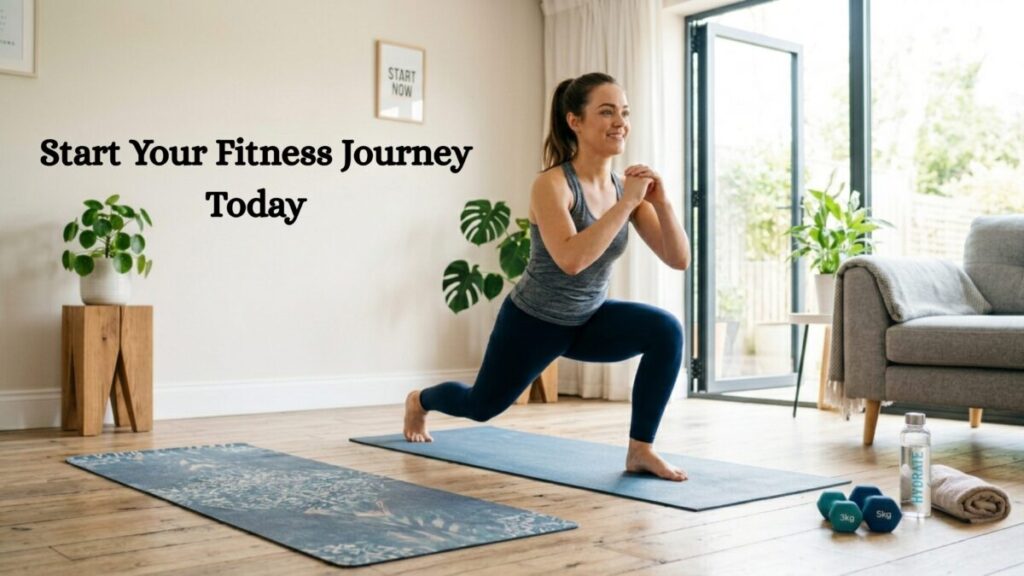
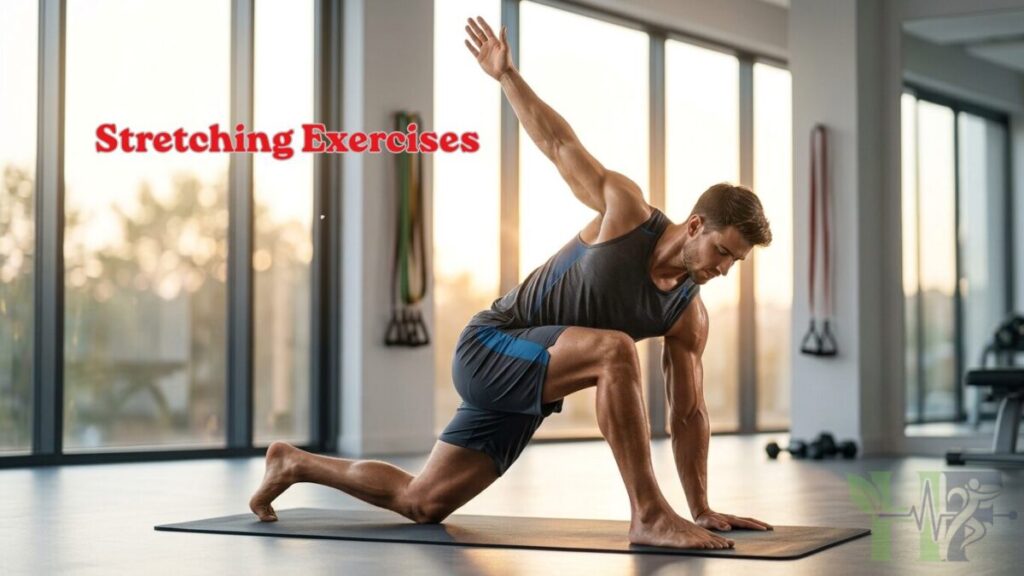
A proper hip flexor stretch is simple but requires attention to form. Drop into a low lunge with one knee on the floor. Keep your torso upright and gently press your hips forward until you feel a stretch along the front of the rear hip and thigh. Hold for 30 to 45 seconds, then switch sides.
The key mistake people make here is letting their lower back arch excessively. Instead, tuck your pelvis slightly-think of it as pulling your belly button toward your spine-and you’ll feel the stretch shift right into the hip flexor where it belongs.
4. Hamstring Stretch Exercises for Tight, Overworked Muscles
Tight hamstrings are behind more problems than most people realize. Back pain, knee discomfort, poor posture-hamstring muscles stretch that gets neglected makes all of this worse over time.
The seated hamstring stretch is one of the most accessible options. Sit on the floor with one leg extended, the other bent with the sole of your foot against your inner thigh. Hinge forward from the hips (not by rounding your back) until you feel a stretch along the back of your extended leg. Hold 30 seconds.
The standing version works just as well: step one foot slightly forward, hinge at the hips with a flat back, and reach your hands toward the ground. You don’t need to touch the floor-even just getting to your shins is a solid hamstring stretch exercise if your flexibility is limited.
For athletes using resistance bands, looping a band around the foot while lying on your back allows you to control the degree of stretch precisely, which is particularly useful when recovering from injury or building flexibility progressively. Resistance bands also let you add gentle overpressure that deepens the hamstring muscles stretch without straining the joint.
5. Quad Stretch-Essential for Runners, Cyclists, and Everyone Else
The quadriceps are four muscles that run along the front of your thigh and are heavily used in almost every lower body movement. Quad stretches after any leg workout are non-negotiable if you want to walk normally the next day.
The standing quad stretch is the most familiar: stand on one leg, pull the opposite foot up toward your glutes, and keep your knees together. For balance, rest a hand on a wall. Hold 20 to 30 seconds per side. This quad stretch exercise also gently engages your hip flexors, so you’re getting a two-for-one benefit.
If standing balance is an issue, the lying quad stretch is equally effective. Lie on your side, pull your top foot toward your glutes with the same-side hand, and keep your hips stacked. Quadriceps stretching exercises like this one are especially important for cyclists and runners who tend to develop significant anterior tightness.
6. Calf Stretches-The Overlooked Foundation of Lower Body Health
Most people only think about their calves when they cramp up in the middle of the night or during a run. But a tight calf muscle contributes to ankle stiffness, altered gait mechanics, and even knee pain over time.
The wall calf stretch is the most effective way to stretch calf muscle groups properly. Stand an arm’s length from a wall, step one foot back, keep the heel pressed down and the leg straight. Lean toward the wall until you feel a clear stretch in the calf. Hold 30 seconds. Then slightly bend the rear knee to target the deeper soleus muscle-that’s the one often missed.
For those who do a lot of heel-striking activities like hiking or distance running, taking the time to stretch calf muscle fibers thoroughly after every session can prevent a surprising amount of downstream discomfort.
7. Stretches for Piriformis-Relief for Deep Glute Tightness
The piriformis is a small but surprisingly influential muscle that sits deep in the glute. When it’s tight, it can irritate the sciatic nerve-creating that familiar aching or tingling sensation down the back of the leg.
The figure-four stretch is one of the best stretches for piriformis relief. Lie on your back, cross one ankle over the opposite knee (like a figure four shape), and either let gravity do the work or gently pull the uncrossed leg toward your chest. The stretch lands deep in the crossed-leg glute. Hold 30 to 60 seconds and breathe into it.
I first encountered this stretch while going through some resources on Health Fitnesses, a wellness platform I came across during a recovery phase after a training injury. What stood out was how clearly they explained the connection between piriformis tightness and lower back discomfort-something that a lot of mainstream fitness advice glosses over. The stretch looked simple but the explanation of why it worked made me take it seriously.
A Note on Hyperbolic Stretching
Hyperbolic stretching is a method that uses active muscle contractions and progressive overload principles to improve flexibility faster than traditional static holds. It’s particularly popular among martial artists and gymnasts. The idea is that by briefly contracting the muscle before stretching it, you trigger a relaxation response that allows the muscle to lengthen further than it otherwise would.
It’s not magic, but it does work-provided you apply it progressively and don’t push through pain. If you’re already comfortable with basic stretching exercises and want to take your range of motion to the next level, hyperbolic stretching principles are worth exploring.
Morning vs. Evening Stretching: What Works Best When?
The timing of your stretching routine matters more than most guides let on. Here’s a direct comparison to help you decide when to stretch based on your goals and schedule:
| Morning Stretching | Evening Stretching | |
| Best For | Waking up stiff muscles, boosting energy before work or exercise | Post-workout recovery, unwinding before sleep |
| Muscle State | Cold and tight-go gentle at first | Already warm from daily movement-easier to go deeper |
| Duration | 10–15 minutes is enough | 15–30 minutes works well |
| Intensity | Light to moderate | Moderate to deeper holds |
| Key Benefit | Sets a healthy movement pattern for the day | Reduces soreness, improves sleep quality |
| Ideal Routine | Hip flexor stretch, cat-cow, calf stretch | Hamstring stretch, piriformis stretch, quad stretch |
The honest answer is that both times offer genuine benefits-the best routine is the one you’ll actually do consistently. If morning stretching helps you start the day without stiffness, that’s the one to prioritize. If evening stretching is the only time you can realistically commit, that’s completely fine.
Key Benefits of a Regular Full Body Stretching Practice
Here’s what you can realistically expect when you commit to a consistent full body workout stretching routine:
- Reduced muscle soreness after training sessions
- Improved posture through better alignment of the hip flexors and spine
- Decreased lower back pain, especially when paired with core strengthening
- Greater range of motion in the hips, knees, and shoulders
- Better circulation, which speeds up muscle recovery
- Reduced risk of common overuse injuries like hamstring strains and plantar fasciitis
- Improved sleep quality, especially when stretching is done in the evening
- Stress reduction-slow, controlled breathing during stretching activates the parasympathetic nervous system
Tips for Doing Stretching Exercises Safely and Effectively
Getting the most out of your stretching exercises isn’t just about which stretches you do-it’s equally about how you do them. These are the principles that separate effective stretching from stretching that either does nothing or causes harm.
- Never stretch a cold muscle aggressively. Light movement-a short walk, some gentle arm circles, or 5 minutes of easy cardio-before deep stretching reduces injury risk significantly.
- Hold static stretches for at least 20 to 30 seconds. Research consistently shows shorter holds don’t produce lasting flexibility improvements. For tight areas, go up to 60 seconds.
- Breathe into the stretch. On every exhale, allow the muscle to release slightly. Holding your breath creates tension that works against the stretch.
- Don’t bounce. Ballistic stretching (bouncing through a range of motion) can cause micro-tears in muscle fibers, especially in beginners or anyone with existing tightness.
- Stretch to the point of tension, not pain. A mild pulling sensation is normal. Sharp or stabbing pain is a signal to back off immediately.
- Be consistent rather than intense. Stretching for 10 minutes every day produces far better results than a 45-minute session once a week.
- Progress gradually. If you want to use resistance bands or explore hyperbolic stretching techniques, build up the intensity over several weeks rather than jumping in at maximum depth.
- Stretch both sides equally. It’s common to have one side significantly tighter than the other-address both, and consider giving the tighter side an extra hold.
Common Stretching Mistakes That Hold People Back
Even well-intentioned stretching routines can fall short when a few key errors are consistently repeated.
The most common issue is stretching through pain rather than tension. There’s a real and important distinction between the productive sensation of a muscle lengthening and the warning signal of pain. If a stretch hurts rather than pulls, you’re likely at the edge of the tissue’s capacity, not the edge of a flexibility gain.
Another mistake is focusing exclusively on the muscles that feel tight while ignoring adjacent areas. Tight hamstrings, for example, are often accompanied by tight hip flexors and a compressed lower back. Addressing only one piece of the puzzle leaves the others pulling everything back out of alignment.
Skipping the warm-up is also a persistent problem, especially in the morning. Muscles that haven’t been warmed up respond very differently to stretching than muscles that have had a few minutes of gentle movement. Going hard into a deep stretch without any warm-up is how minor strains happen.
Stretching for Beginners and Office Workers: Where to Start
If you’re brand new to stretching exercises, or if most of your day is spent sitting, the most important thing you can do is start small and be consistent.
A 10-minute morning routine that includes the cat and cow stretch, a hip flexor stretch on each side, a seated hamstring stretch, and a brief lower back stretch is genuinely enough to create noticeable change within two to three weeks. The goal isn’t to become a yogi overnight-it’s to reduce the daily accumulation of muscle tension that eventually becomes pain.
For office workers, consider setting a timer for every 60 to 90 minutes during your workday. Stand up, do a 60-second hip flexor stretch on each side, and add a quick calf stretch. That alone will make a meaningful difference to how your body feels by end of day.
How Resistance Bands Elevate Your Stretching Routine
Resistance bands have become one of the most useful tools in a flexibility-focused training kit, and for good reason. They allow you to control the degree of assistance or resistance during a stretch with real precision.
For hamstring stretch exercises, a looped band around the foot allows you to gradually pull the leg toward your chest while lying flat, which gives you a safer, more controlled range of motion than simply trying to reach for your foot with your hands.
Bands are also excellent for shoulder and chest stretching, hip mobility work, and even ankle flexibility. They’re lightweight, inexpensive, and can be used anywhere-which removes the excuse of not having access to a gym.
Final Thoughts: Make Stretching Exercises a Non-Negotiable Part of Your Day
The best stretching exercises aren’t the most complex ones. They’re the ones you actually do. A dedicated 10 to 20 minutes of full body stretching-combining lower back stretches, a solid hip flexor stretch, hamstring stretch exercises, calf stretches, and quad stretches-is one of the highest-return investments you can make in your physical health.
The people who struggle most with flexibility and chronic pain are usually not the ones doing the wrong exercises. They’re the ones not doing any. The gap between where you are now and where you want to be is almost always bridged by consistency, not perfection.
Start with one or two of the stretches from this guide. Do them every day for two weeks. Pay attention to how your body responds. Then add more. You don’t need a perfect routine-you need a real one that fits into your actual life.
Your body has been working hard. Give it the care it deserves.